
Buried downspout drainage across Indiana
One inch of rain on a 1,500 square foot roof is roughly 900 gallons. That water has to go somewhere. We bury solid pipe that carries it past your foundation instead of dropping it at the wall.
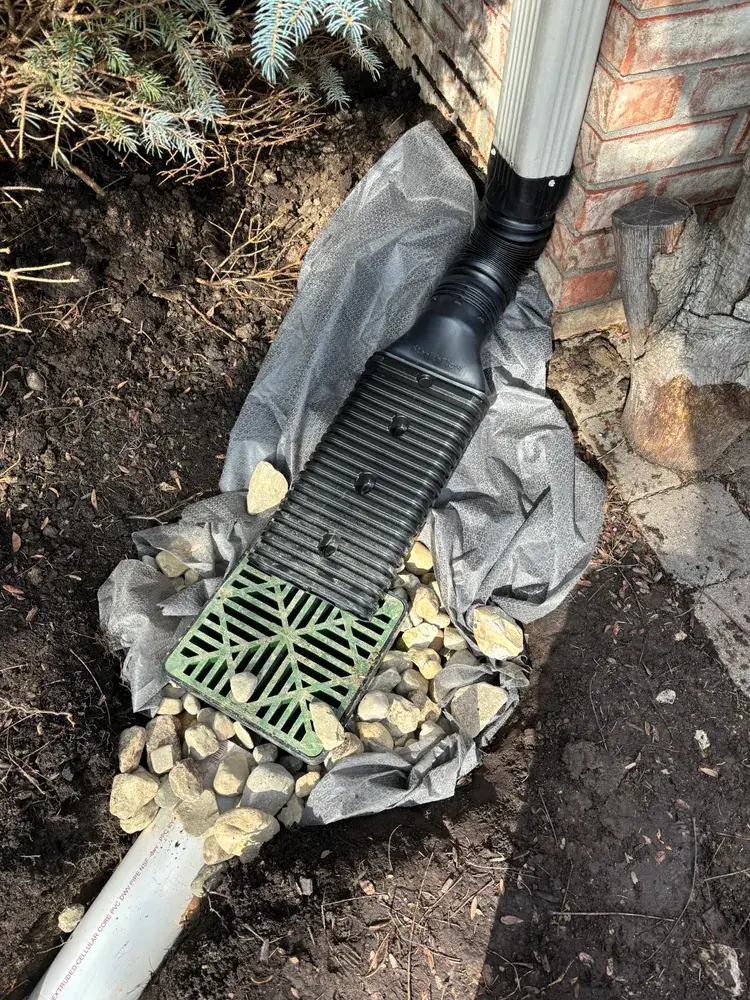
A buried downspout drain is a run of solid pipe, never perforated, that takes water from the bottom of a downspout and carries it out past the foundation to a safe discharge point. The goal is distance, not filtration. You are moving water, not straining it into the soil next to the house.
Do the math on your own roof. A 1,500 square foot roof shedding one inch of rain sheds about 900 gallons. A bigger roof or a two inch storm, which central Indiana gets several times a year, pushes that number well past a thousand. Four downspouts splitting that load still means hundreds of gallons landing at each corner of the house in an hour.
A splash block moves that water two feet. A short above-ground extension might move it six. Neither one gets it past the zone where it can soak straight back down to your footing. Solid buried pipe, sized and pitched correctly, gets it to daylight, a rock bed, or a storm system that is built to take it.
There is also a where-does-it-legally-go question, and homeowners rarely ask it before we do. Roof water and downspout discharge are not the same thing as sewage, and the two systems are not supposed to mix.
Signs you need this
What tells you the downspouts are the problem
- There is a worn, muddy trench under every downspout where a splash block used to sit.
- The ground within a few feet of a downspout stays soft or spongy long after the rest of the yard has dried.
- A basement wall gets damp on the same side of the house where a downspout dumps close to the foundation.
- Mulch beds near a downspout wash out or float every time it rains hard.
- You have moved a splash block more than once because it kept shifting or clogging with debris.
- A neighbor's yard or your own low spot fills up shortly after a downspout starts running.
- You are not sure where your downspouts actually discharge, because nobody has ever shown you.
How we do it
From the bottom of the gutter to daylight
-
Walk every downspout
We count how many downspouts a house has, where each one sits relative to the low points in the yard, and whether two or more can share a single main line to daylight.
-
Set a catch basin at the base
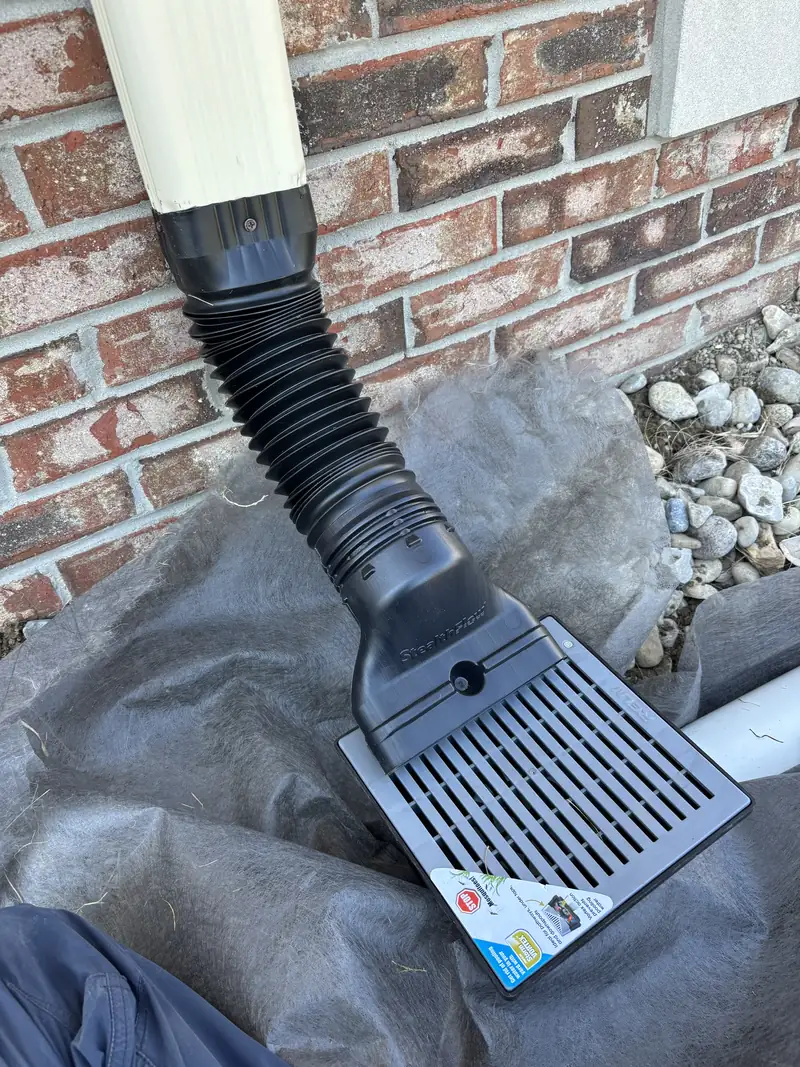
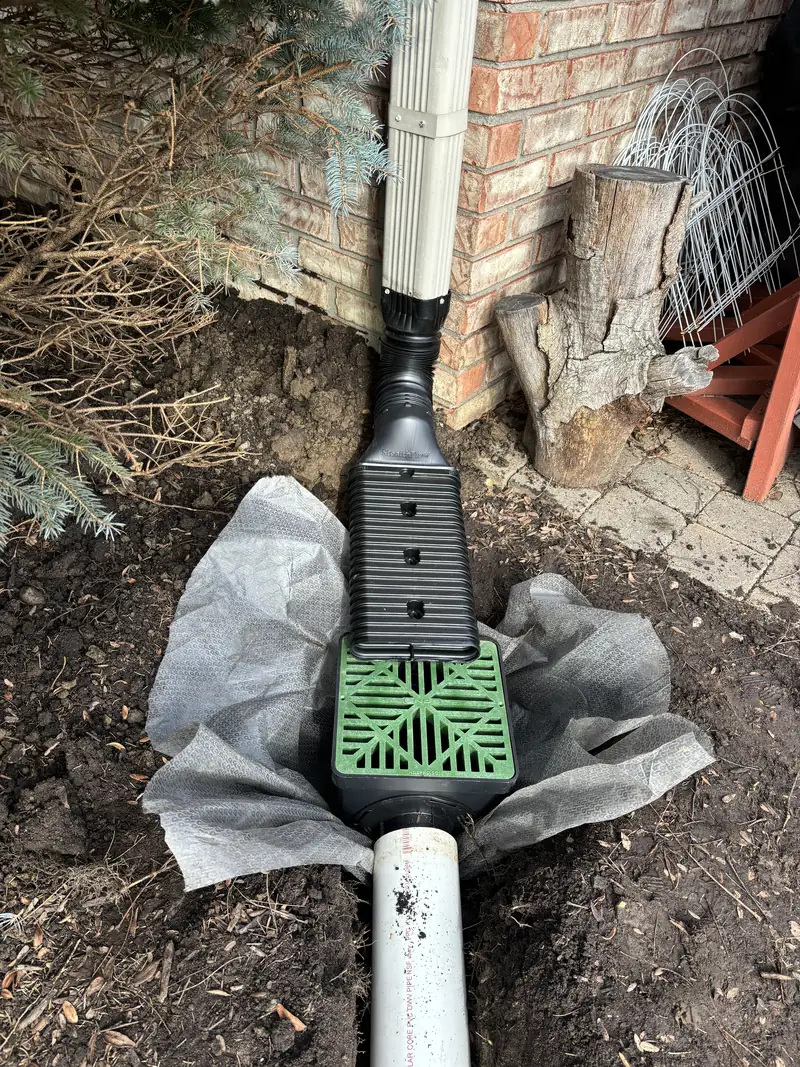
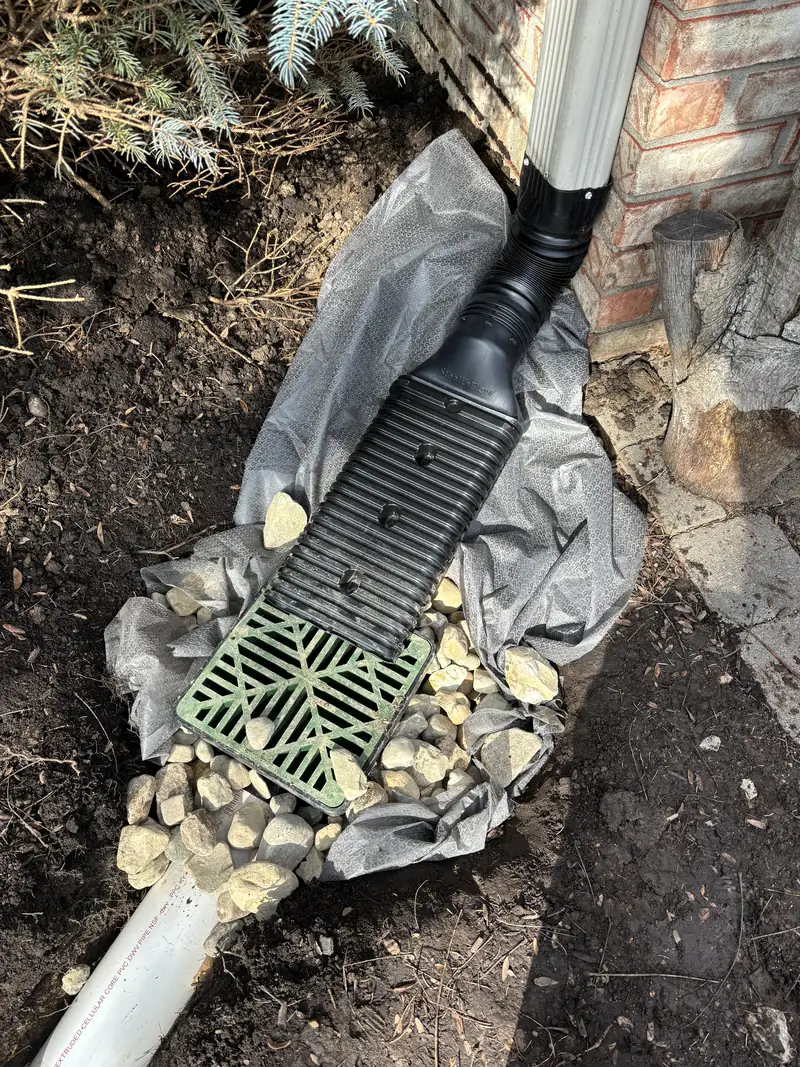
A grated basin at the downspout elbow catches leaves and grit before they reach the pipe, and gives us a clean, serviceable connection point instead of a glued fitting buried under the gutter.
-
Hand dig the trench
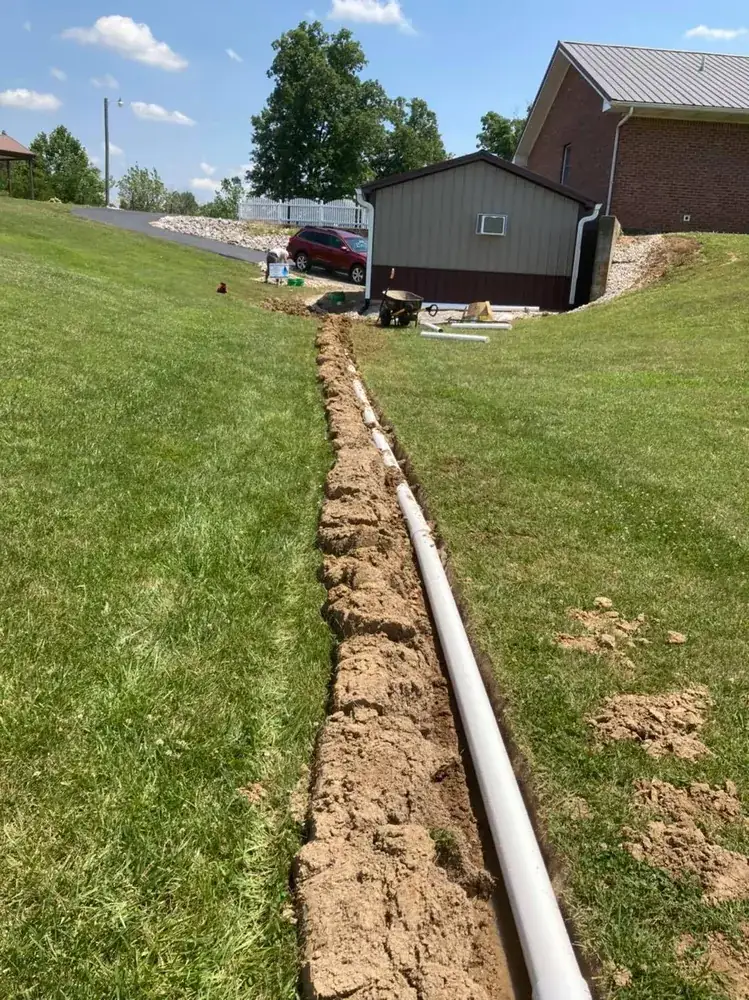
We cut a narrow trench by shovel from the basin out to the discharge point, at a pitch that keeps water moving instead of sitting in the pipe between storms.
-
Run solid pipe, never perforated
Solid SDR-35 or corrugated pipe carries the water in the pipe, not out through slots into the surrounding soil. Perforated pipe belongs on a French drain collecting groundwater, not on a downspout line pushing roof water at pressure.
-
Tie multiple lines into one main where it makes sense
Two or three downspouts on the same side of the house often share one main trunk out to daylight instead of each one getting its own separate run across the yard.
-
Add a cleanout
A cleanout fitting at the transition point gives you a way to rod the line out years from now if it ever silts up, without digging up the yard to find it.
-
Finish the discharge and put the sod back
The line ends at a pop-up emitter, a rock bed, or an open discharge well clear of the foundation, and every trench gets its hinged turf folded back into place.
Materials
What actually goes in the trench
| Component | What we use | Why |
|---|---|---|
| Main pipe | 4 inch solid SDR-35 or corrugated pipe, never perforated | Solid pipe carries roof water in the pipe, not into the soil along the run. |
| Catch basin | Grated basin set at the downspout elbow, wrapped in filter fabric | Catches leaves and grit at the source so the pipe below stays clear. |
| Fittings | Glued or gasketed PVC fittings at every joint and direction change | A sealed joint is a joint that does not leak into the surrounding trench backfill. |
| Cleanout | Capped cleanout riser at the main tie-in point | Gives you access to rod the line clear without re-digging the yard. |
| Pitch | Consistent fall toward the outlet, checked with a laser level | A flat or back-pitched run holds standing water in the pipe and invites freeze problems. |
| Bedding | Compacted native soil or sand base under the pipe | Keeps the pipe supported and the pitch consistent after the ground settles. |
| Multiple downspout ties | Wye or tee fittings joining two or more downspouts into one main | Fewer lines across the yard, one properly sized trunk instead of several small ones. |
| Outlet | Pop-up emitter, rock bed, or open discharge at daylight | Releases the water well clear of the foundation on a surface built to take it. |
Recent work
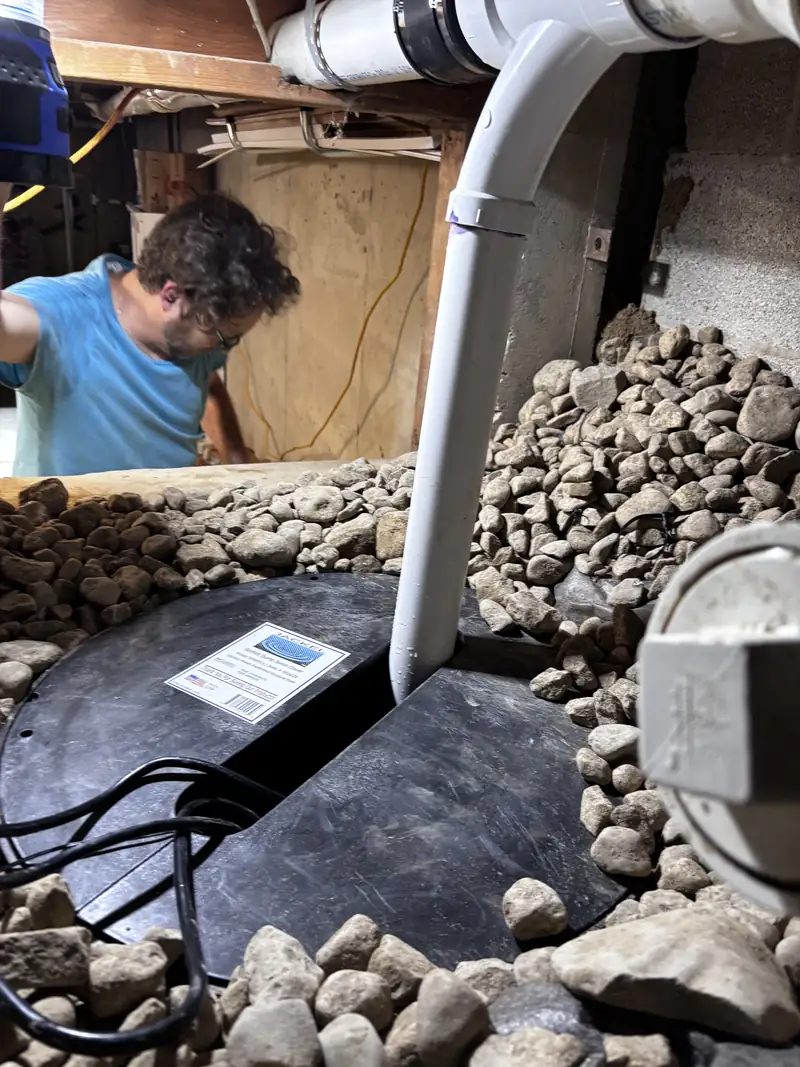
Downspout lines we have buried
What it costs
What moves the number
Our average job across all services runs around $4,000. A single buried downspout run is usually well under that. Tying every downspout on a house into buried lines with a shared main and cleanouts moves it up toward that average or past it.
The things that actually move the price:
- How many downspouts. One line is a different job from six.
- Trench length to daylight. A tight lot with a low point close to the house costs less pipe than a flat yard with the low point far away.
- What is in the way. A patio, a driveway, mature landscaping or a fence line all slow hand digging.
- Whether lines get combined. Tying two or three downspouts into one main is often cheaper than running each one separately.
- Ground conditions. Dry clay in late summer is harder to open than the same clay after a wet spring.
You get one fixed number for a defined scope after the on-site visit. Half holds the date, the balance is due when you have walked the finished job. We do not offer financing.
Often quoted alongside this
What homeowners say
Downspout drainage questions
Answers before you call
Yes, in most Indiana cities that is the expected discharge point. Kokomo's illicit discharge rule specifically lists roof downspouts and foundation drains as allowed discharges to the storm system, which is the opposite of the sanitary sewer. Buried downspout pipe should route to daylight, a storm inlet, or a pervious area, never into a sanitary line.
It overloads a system that was never sized for roof water and it is often against the rules where you live. Citizens Energy Group in Indianapolis runs a program called Correct Connect that specifically targets downspouts illegally tied into the sanitary sewer, because that clean rainwater takes up capacity meant for wastewater treatment. If your house is older, it is worth checking where your downspouts actually go.
Because the job is to move the water away, not to leak it into the soil next to your house. Perforated pipe is built to let groundwater seep in along its length, which is exactly right for a French drain and exactly wrong for a downspout line. A downspout run needs solid pipe carrying the water in the pipe until it reaches daylight.
Far enough to clear the zone right around the foundation where the grade is doing its own work. Indiana's residential code requires the ground to fall at least 6 inches within the first 10 feet from the wall. The pipe should discharge past that point, not release water back into the soil it just crossed.
In some cities, yes. Carmel's stormwater ordinance S-74-18 offers a $35 per downspout reimbursement credit for correcting the connection. Rules and amounts vary by municipality, so check with your local stormwater office before you assume a credit applies where you live.
Yes, and on most houses it is the more practical choice. Downspouts on the same side of the house can share a main trunk line to daylight through a wye or tee fitting, which means less trenching across the yard than running each one separately.
Where to next?
Free estimate
Let us get your roof water past the foundation.
Send the form and we will reply within about 30 minutes during business hours. The visit and the written quote are free.
- Solid pipe, sized and pitched correctly
- Fixed written price for a defined scope
- Dug by hand, sod put back
- Kokomo, Indianapolis, Bloomington and surrounding towns