
Yard drainage across Indiana, done the way your yard needs
There is more than one way to drain a yard. When the water is coming off a downspout, PVC pipe through the yard is usually the cleanest fix. When the drain should follow a garden bed and the natural curve of the yard, a rock and fabric trench fits better. We pick the one that suits your yard. Either way, every trench is dug by hand.
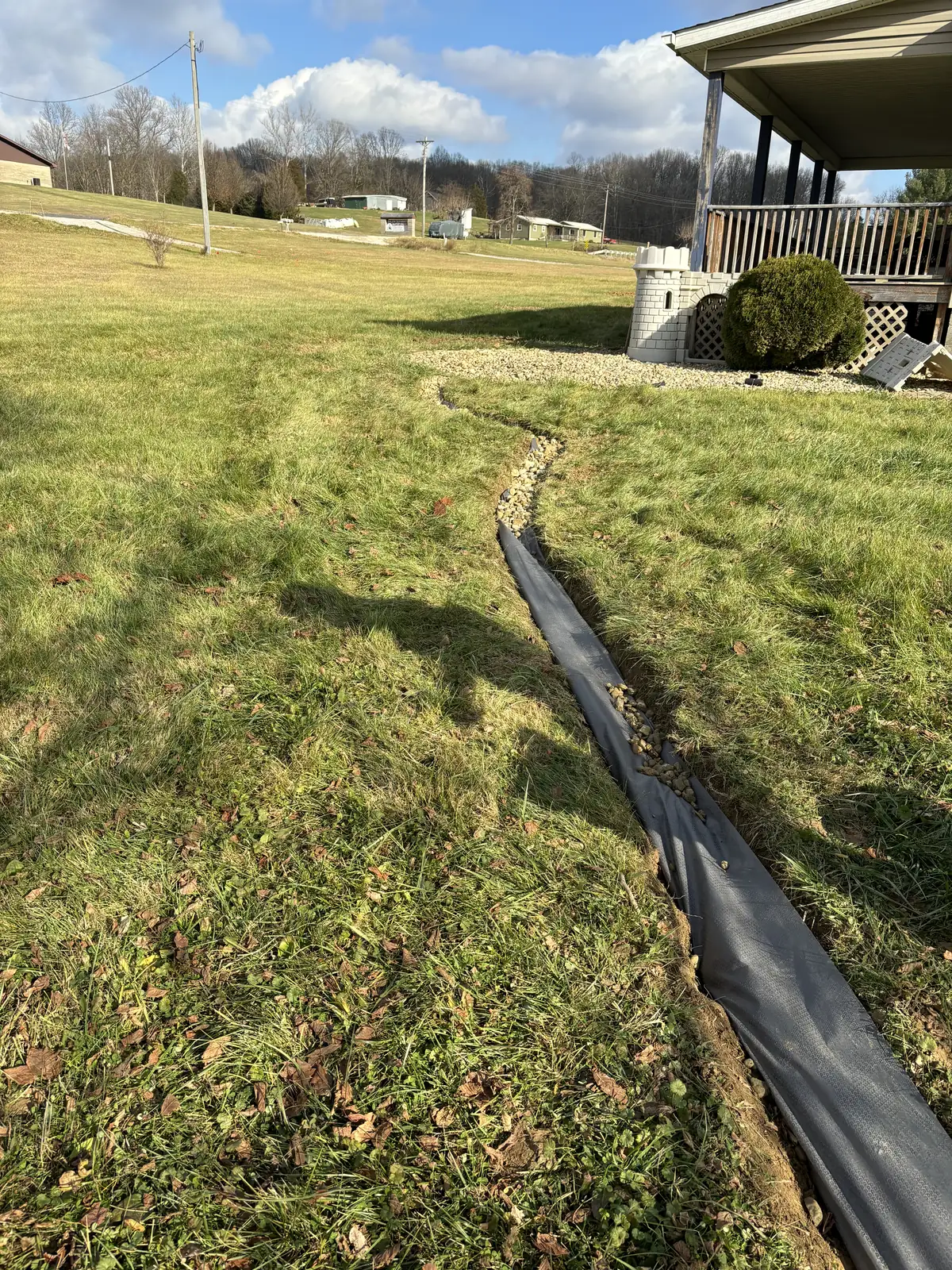
Yard drainage means getting the water that collects in your yard somewhere it can go. How we do it depends on where the water is coming from and what the yard looks like.
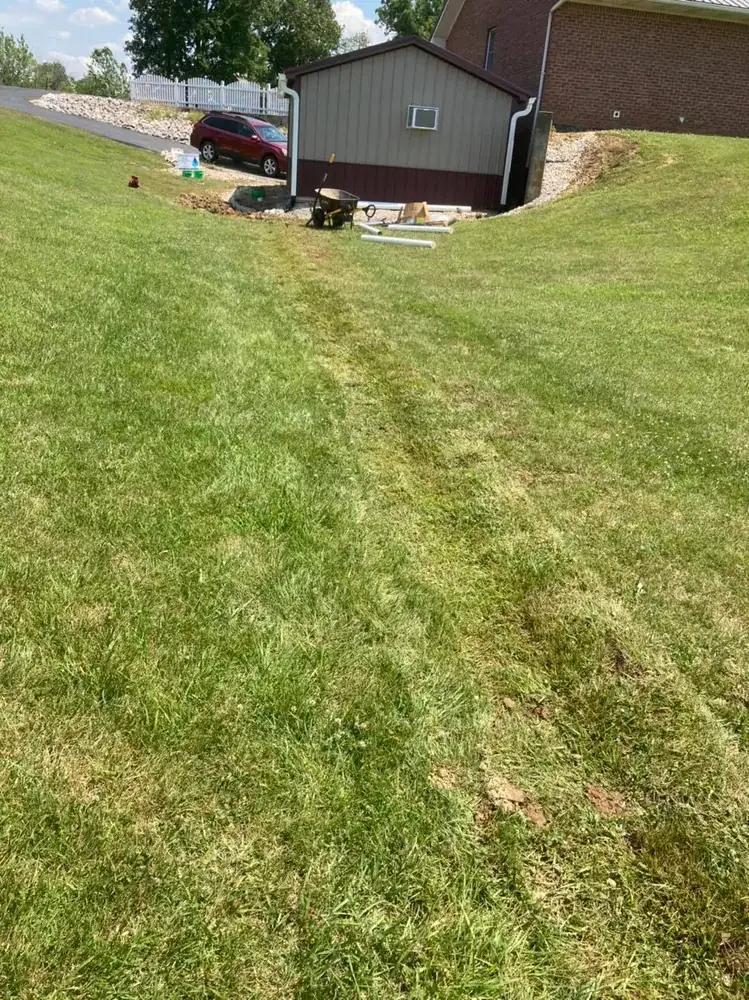
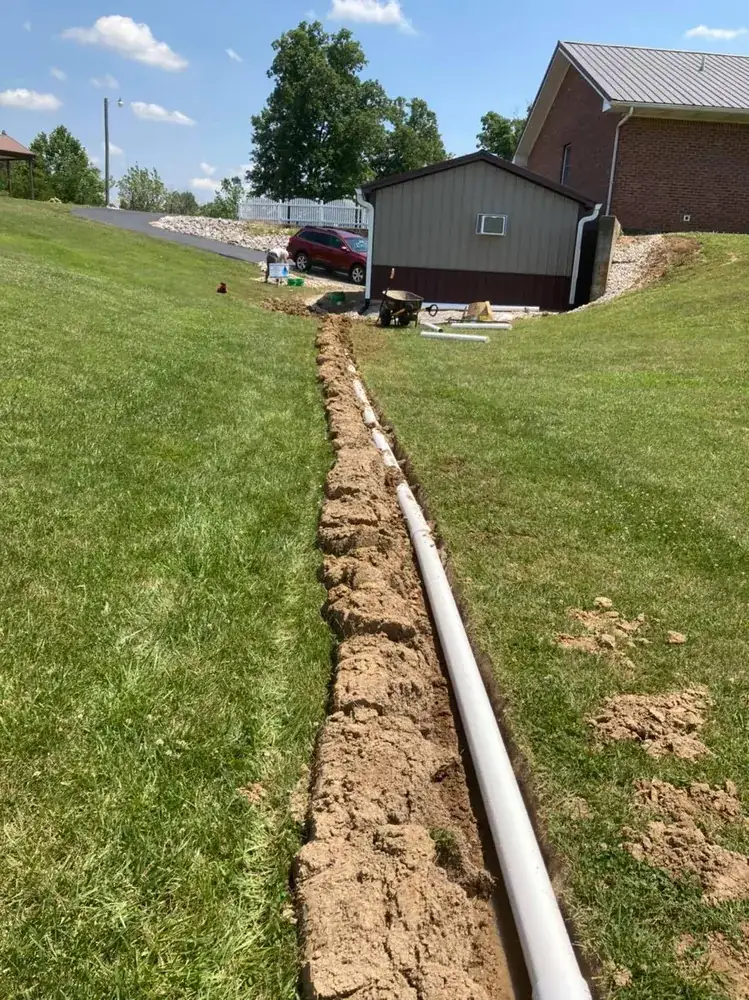
If most of the water comes off a downspout, the best fix is often 4 inch PVC pipe from the downspout out through the yard, so the water passes through it with ease and comes out away from the house. The pipe is buried and the grass we cut goes right back on top.
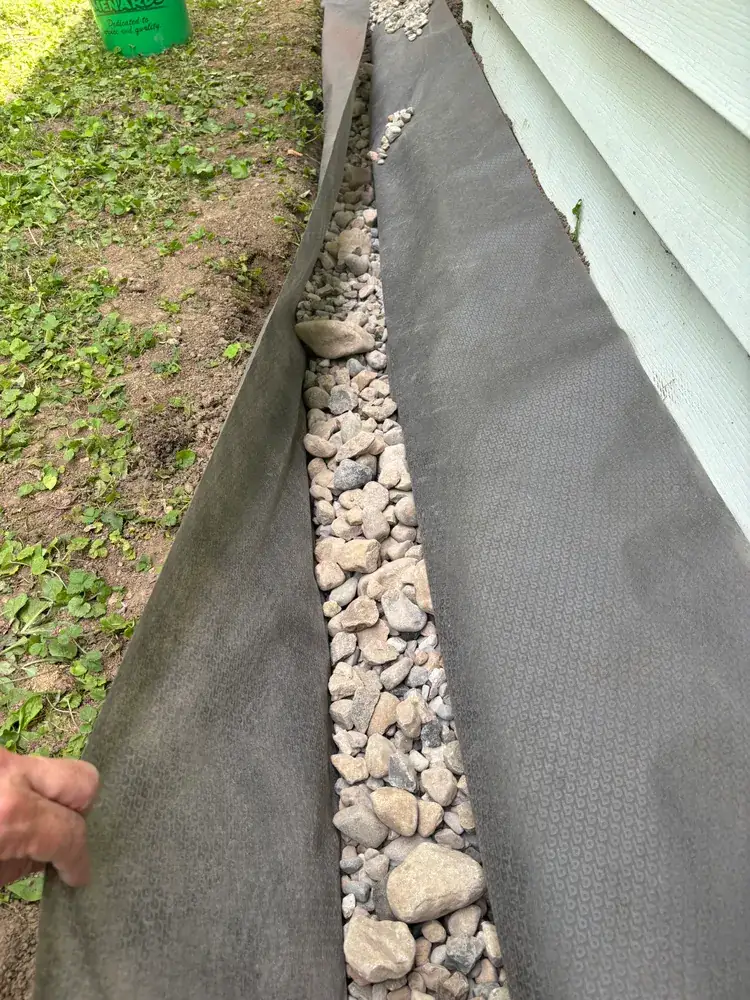
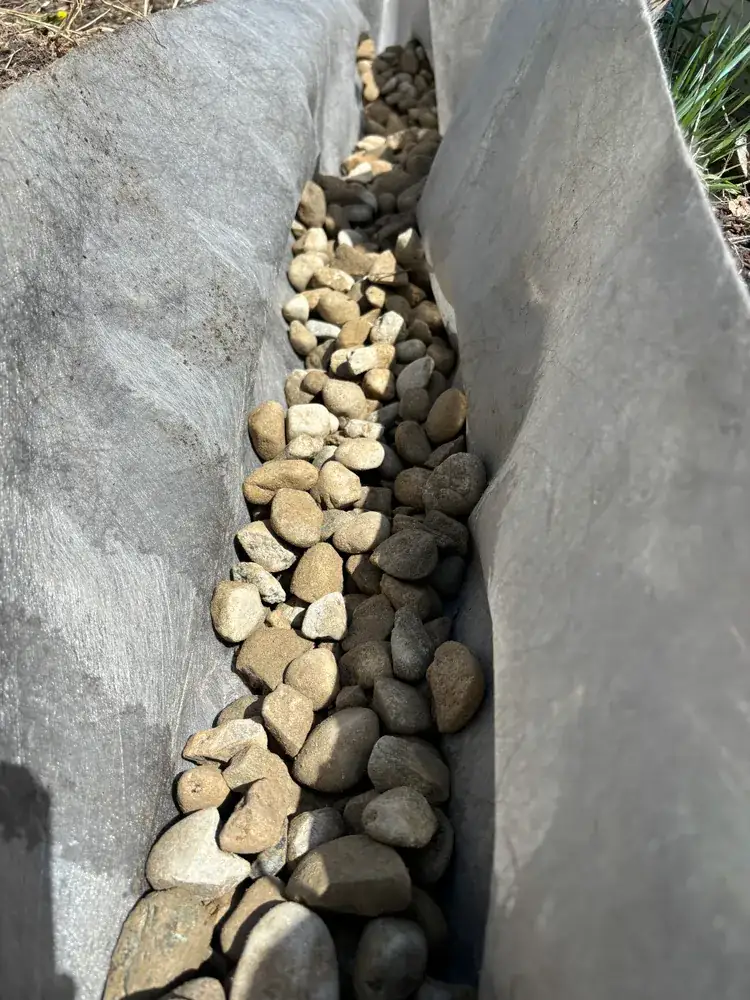
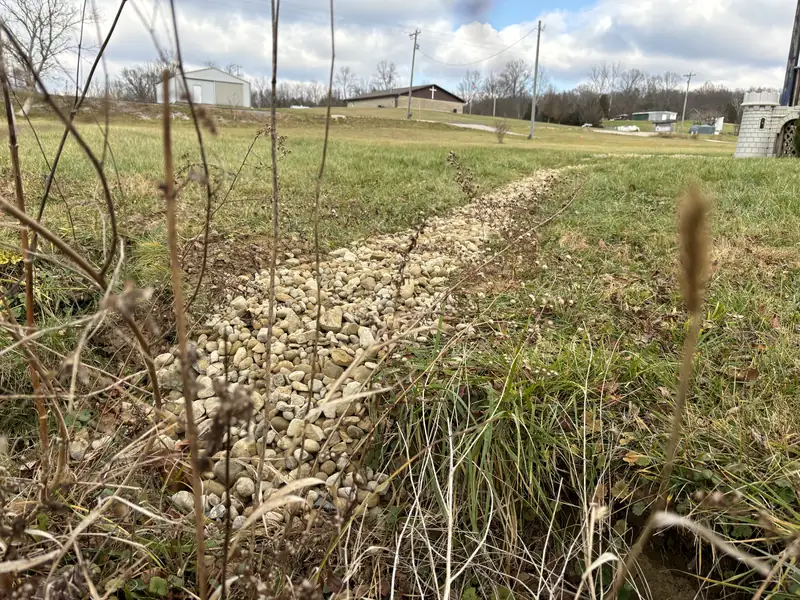
If we want to follow the path of a garden bed and blend in with the natural curve of the yard, a trench lined with fabric and filled with rock is the better fit. It looks like part of the landscaping instead of a pipe job.
Some yards need both. We walk the yard with you and tell you which one fits before we quote it.
Deciding between the two? Pipe or rock trench lays out when each one fits. If the lawn stays soggy for days, here is why a yard stays wet after rain.
Signs you need this
What tells you the yard needs help
- Water stands in the same low spot after almost every rain.
- The lawn stays soft and soggy for days after the rest of the neighborhood dries out.
- Water from a downspout runs across the yard instead of away from the house.
- Garden beds stay wet or wash out along their edges.
- You can see a worn path in the grass or soil where water runs every storm.
How we do it
Pipe or rock, then dug by hand
-
Find where the water comes from
A downspout, runoff from higher ground, or a low spot that just collects. The source decides the method.
-
Pick the method
PVC pipe when the water comes off a downspout. A rock and fabric trench when the drain should follow a bed or the curve of the yard. Sometimes both.
-
Dig it by hand
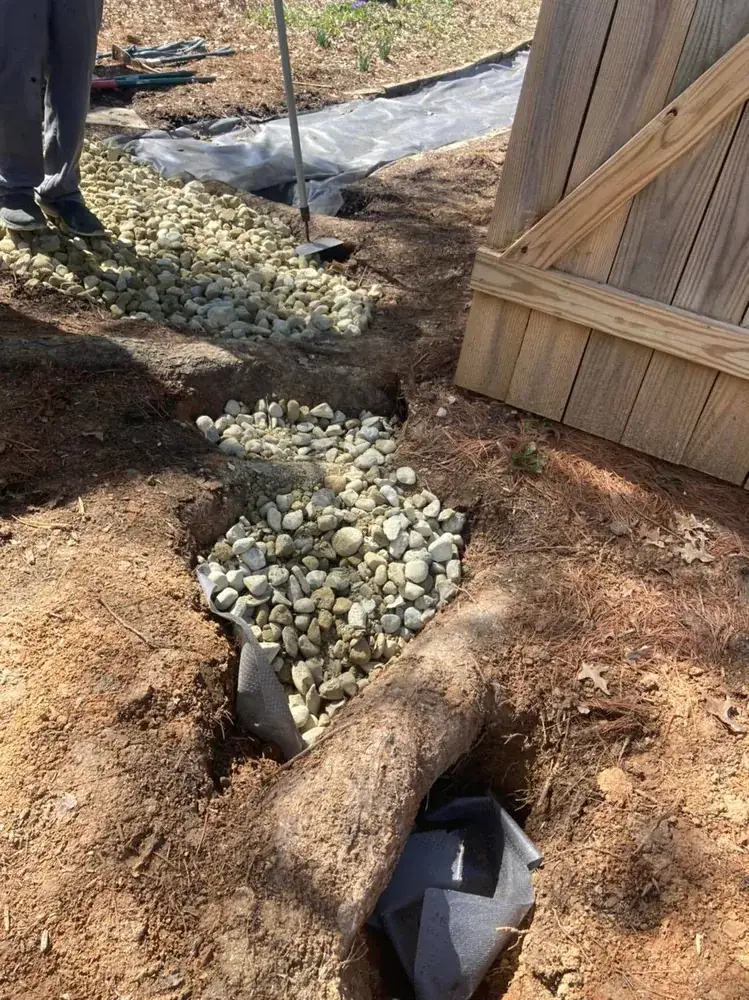
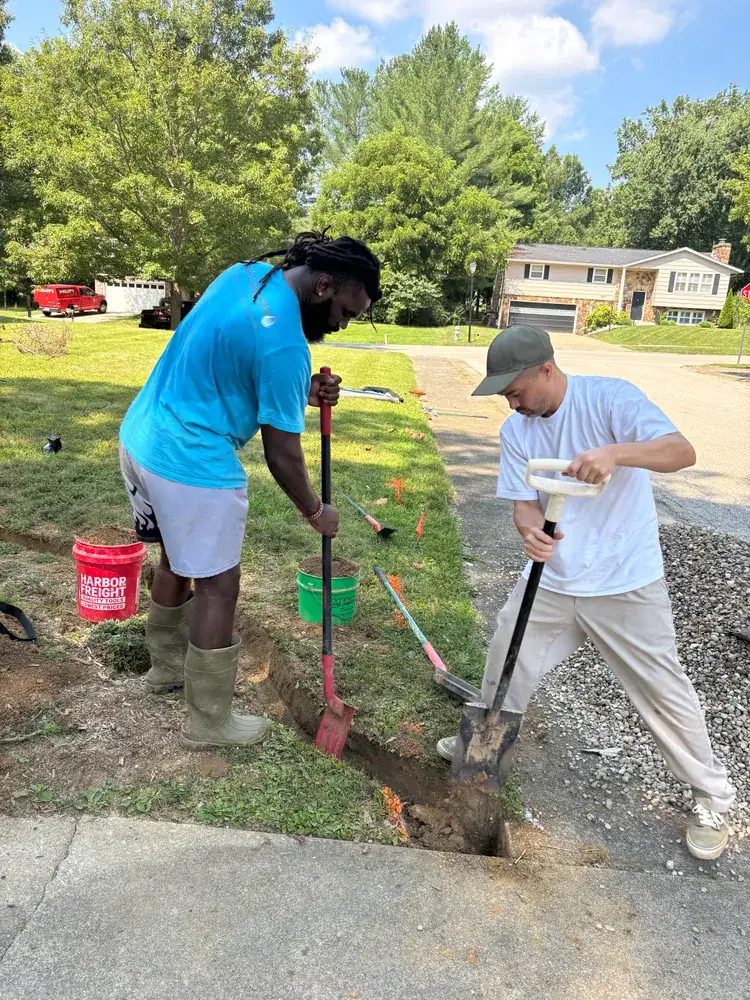
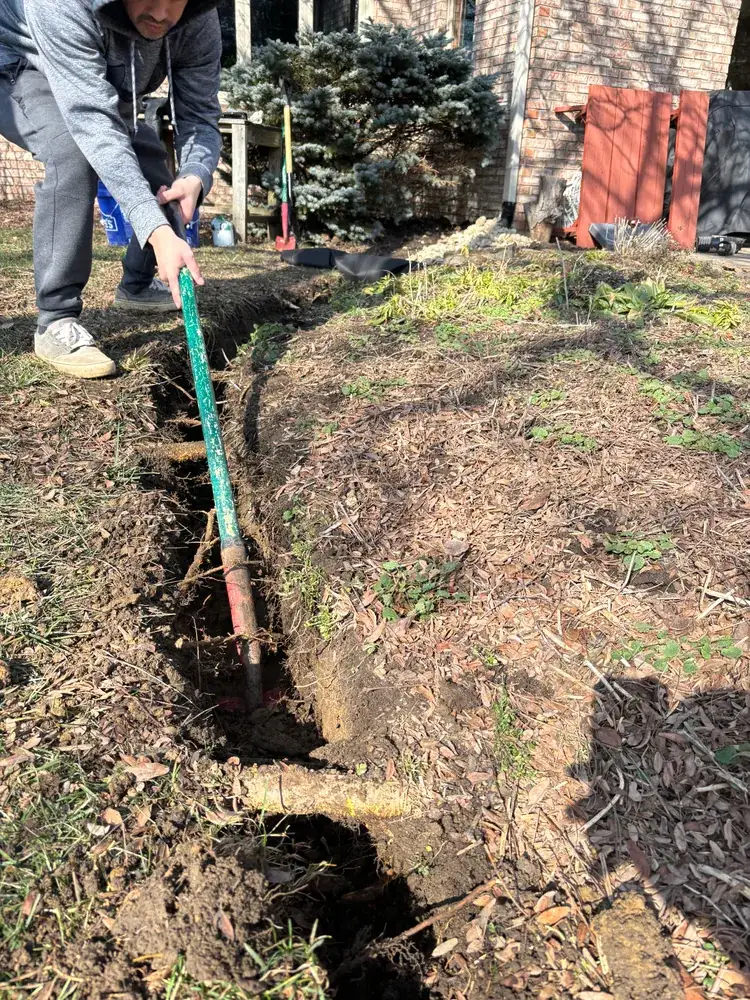
Our crew digs with shovels. No machine ruts, and roots and plants you want to keep get worked around. The sod is cut on three sides and hinged open, so it folds back into the same spot.
-
Pipe runs: lay it and fold the grass back
When the drain starts at a downspout we usually set a catch basin there, so the pipe starts 6 to 8 inches deep. From the high point it gets 1/8 inch of fall for every foot, so the water passes through with ease, and the grass we cut is folded right back over it.
-
Trench runs: fabric, then rock
The trench is lined with fabric and filled with rock, following the bed line or the natural curve of the yard, with the same 1/8 inch of fall for every foot from the high point.
-
Clean up
The work area is cleaned up before we leave.
Why by hand
Every yard drain we install is dug with shovels
We do not have a machine-dug version of this job. Every trench on your property is opened with a shovel, not a mini excavator or a walk-behind trencher. It takes more labor time, and it saves your topsoil, your turf, and whatever is buried where the plans do not show it.
We pride ourselves in not using heavy equipment and placing your grass back to where it was wherever we dig. On central Indiana's clay, that choice matters more than it would somewhere sandy. Purdue Extension describes the region's soils as primarily clay, which leads to heavy, poorly drained ground to begin with. Compacting that clay further with equipment tires creates what Purdue calls a bathtub effect, a dense layer that holds water instead of letting it move through.
So a machine that is supposed to fix a drainage problem can leave behind a new one, just six inches to either side of the pipe.
The zipper method
Most crews that hand dig cut the sod free in strips, stack it to one side, and lay it back down when they are finished. It works, but strips get shuffled, they dry out at the edges, and they rarely go back down in exactly the position they came up.
We do it differently. We cut three sides of the sod along the trench line and leave the fourth side attached. That uncut edge acts as a hinge, so the turf peels back like a zipper and stays rooted to your yard the entire time. When the pipe and stone are set, it folds straight back down into the cut it came out of.
Anthony calls it the zipper method, or the hinged side. It is a small difference in technique and a noticeable difference in how the lawn looks two weeks later. Nothing gets carried off, nothing gets set back an inch off line, and the seam closes on itself.
Where digging by hand matters most
- You have mature landscaping, a sprinkler system, or an invisible fence and do not have accurate as-built drawings.
- The side yard between your house and the neighbor's fence is narrower than a machine's track width.
- You just paid to re-sod or re-seed the yard and cannot afford to have half of it torn up again.
- The gate to your backyard is a standard 36 to 42 inch walk gate, not a double-wide equipment gate.
- You have a septic field, a well line, or a gas line in the general area and want the extra care that comes with digging by feel.
- The trench run crosses close to a tree you want to keep, and root damage from a bucket is a real risk.
Hand vs machine
What a machine would cost your yard
| Factor | Hand dig (how we do it) | Mini excavator or trencher |
|---|---|---|
| Turf damage | Limited to the trench width, turf hinged back and folded into place | Tire tracks and staging area beyond the trench itself, often needing re-seed |
| Soil compaction | Only where we tamp intentionally, native soil elsewhere stays open | Equipment weight compacts clay well beyond the cut line, worse when soil is wet |
| Buried utility risk | A shovel stops on contact, low risk to shallow lines | A bucket does not feel resistance the same way, higher risk without exact locates |
| Access width required | A standard walk gate, roughly 36 inches | A double-wide gate or a clear path, often 5 feet or more |
| Restoration cost | The same turf folds back over the cut, usually no added seeding cost | Wider disturbed area often needs new sod or seed and starter fertilizer |
| Speed | Slower, priced into the labor | Faster on long, open runs with no obstacles |
Recent work
Yards we have drained
 BeforeAfter
What it costs
What moves the number
A single pipe run from one downspout is a smaller job than a long rock trench across the yard.
The things that actually move the price:
- Pipe or rock. A buried pipe run and a rock and fabric trench use different materials and take different time.
- How long the run is. The distance from where the water starts to where it can leave the yard.
- What is in the way. Beds, trees, walks and driveways all change the route.
- How much rock it takes. A longer or wider trench takes more stone.
You get one fixed number for a defined scope after the on-site visit. Half holds the date, the balance is due when you have walked the finished job. We do not offer financing.
Often quoted alongside this
What homeowners say
Yard drainage questions
Answers before you call
It depends on the yard. PVC pipe when the water comes off a downspout. A rock and fabric trench when the drain should follow a garden bed or the natural curve of the yard. Some yards get both.
When most of the water is coming off a downspout. A PVC pipe through the yard lets that water pass through with ease and come out away from the house.
When we want the drain to follow a garden bed and blend in with the yard. It reads as part of the landscaping.
We dig by hand, so there are no machine ruts. On pipe runs the grass we cut is folded right back over the pipe.
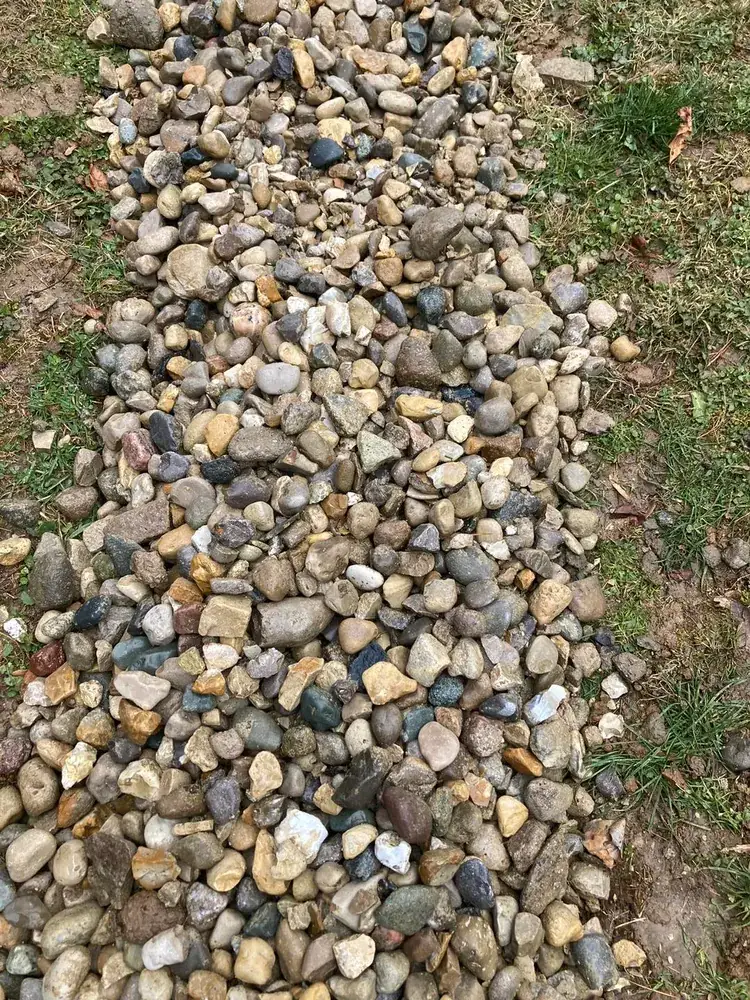
A trench drain is one of the ways we drain a yard: a hand-dug trench covered in river rock, sometimes hidden under a path. The rock is added to dirt level, not grass level, so you can mow right over the top.
Away from the house, to a spot where it can leave the yard.
It really changes the result, especially on clay. Machine tires and tracks compact the soil on either side of a trench, and central Indiana's clay-heavy ground is already rated poorly to very poorly drained by the USDA. Compacting it further makes drainage worse right where you just paid to improve it. Hand digging disturbs only the trench itself and leaves the surrounding soil structure alone.
Yes, in most cases within a couple of weeks. We use what we call the zipper method: three sides of the sod get cut and the fourth is left attached as a hinge, so the turf folds back into the same cut when the trench is closed. The seam line is visible for a short while and then it is not. A machine-dug yard usually needs a wider area re-seeded because the disturbance is not limited to the trench.
Usually not, and that is exactly the situation hand digging solves. A standard walk gate is around 36 to 42 inches wide. A mini excavator or walk-behind trencher generally needs a clear path of 5 feet or more. Shovels and wheelbarrows fit through a standard gate, so tight side yards and fenced backyards are not a barrier to us the way they are to equipment.
Labor time runs higher, since a crew with shovels moves slower than a bucket. That cost is often offset by restoration savings, because a hand-dug yard rarely needs new sod or seed beyond the trench line itself. Your written quote reflects the actual scope of your yard, not a generic rate.
We call in locates before we dig, same as any contractor should. Beyond that, a shovel gives a crew member feedback the instant it touches something solid, whether that is a rock, a root, or a line that was never on the locate ticket. A bucket moving at speed does not offer that same margin.
Where to next?
Free estimate
Let us look at where your yard water comes from.
Send the form and we will reply within about 30 minutes during business hours. The visit and the written quote are free.
- Pipe or rock, whichever fits your yard
- Fixed written price for a defined scope
- Dug by hand, sod put back
- Serving all of Indiana from Kokomo and Bloomington