
Your yard is wet. Here is how we figure out why.
Not every soggy yard needs the same fix. Before you pay for a trench drain, a pipe run, or anything else, it helps to know which of four common causes you actually have.
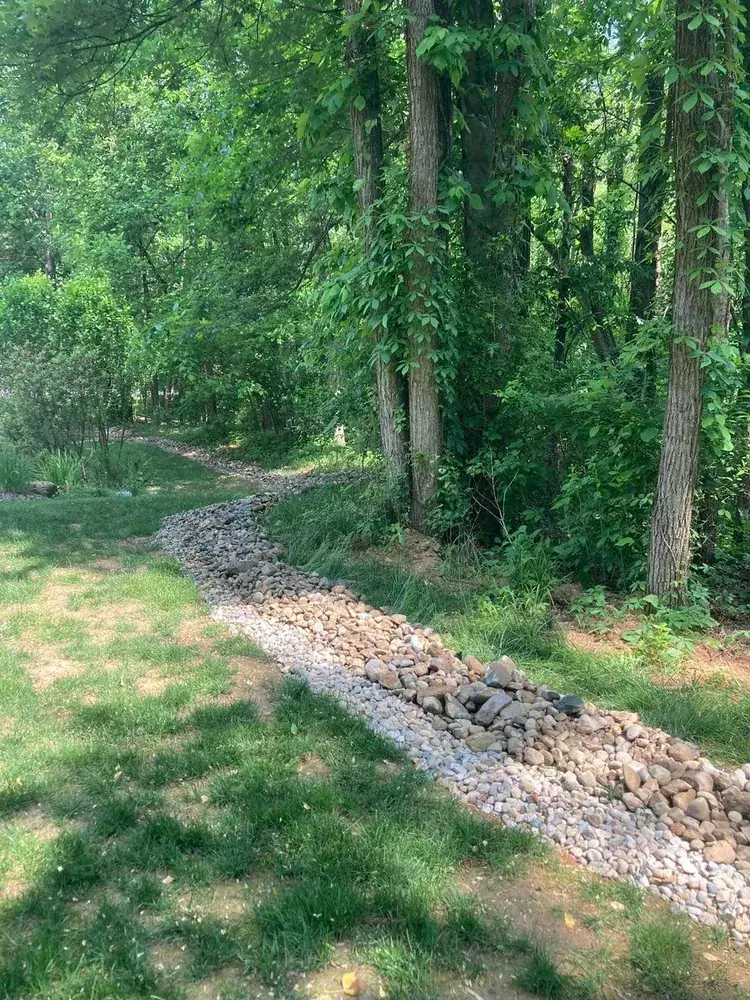
A chronically wet yard almost always traces back to one of four causes: clay soil with a high water table, ground compacted during construction, water arriving from a neighbor's lot or higher ground, or a downspout and sump line discharging right where you stand. The fix is different for each one, so the diagnosis has to come first.
Homeowners often call us asking for a specific product, a French drain, a sump pump, because that is the term they found online. Sometimes that is exactly right. Often the wet spot they are describing has a different cause than the product they searched for, and installing the wrong fix means paying twice.
This page is not a product page. It is meant to help you figure out which situation you are actually in, then point you to the specific service that solves it. We work outside-in and we do not sell a full system when a $600 fix would have handled it.
If your lawn stays soggy for days after every rain, start with why a yard stays wet after rain.
Signs to check
What to notice before you call anyone
- Note whether the wet spot shows up during rain, right after rain, or is wet almost all the time regardless of weather.
- Check whether the water seems to arrive from a specific direction, such as a neighbor's yard or a slope above your property.
- Look at where your downspouts and sump discharge line actually release water, and whether that spot matches your wet area.
- Press a finger into the soil in the wet spot. Soft, dense clay that stays compacted feels different from soil that simply will not drain.
- Check whether the wet area was disturbed during a home build, addition, or utility work in the last several years.
- Notice whether the grass in the wet spot is thin or absent, which often points to standing water rather than just damp soil.
How we diagnose it
The four causes, and how we tell them apart
-
Clay soil and a high water table
Central Indiana's Crosby, Brookston, Miami and Kokomo soil series are clay-heavy and rated somewhat poorly to very poorly drained by the USDA. If your whole yard drains slowly, not just one corner, this is often the underlying cause and a full yard drainage system is usually the answer.
-
Construction compaction
Heavy equipment during a build or addition compacts the soil beneath it, creating a dense layer that holds water like a bathtub instead of letting it move through. This shows up as a wet area in a specific zone tied to where equipment worked, often near a driveway, a new addition, or a utility trench.
-
Neighbor or uphill runoff
Water does not respect property lines. If your low point sits below a neighbor's yard or a slope, their runoff may be arriving at your property with nowhere planned to go. We check the grade across the property line, not just your own yard, to confirm this.
-
Downspout or sump discharge in the yard
One inch of rain on a 1,500 square foot roof is about 930 gallons. If a downspout or sump line releases that volume at a single point in your yard instead of carrying it away, that point will stay wet no matter how good your soil is.
-
Match the cause to the fix
Once we know which of the four is driving your specific wet spot, or which combination, we recommend the service built for that cause rather than a default answer.
Symptom to fix
What your symptom usually points to
| Symptom | Likely cause | What usually fixes it |
|---|---|---|
| Whole yard drains slowly after every rain | Clay soil, naturally poor drainage | Yard drainage: pipe from the downspouts, or a rock and fabric trench that follows the yard |
| One specific area near new construction stays wet | Soil compacted by equipment during a build | A rock and fabric trench through that compacted zone |
| Water arrives from a specific upslope direction | Neighbor or uphill runoff crossing the property line | A trench drain placed to catch the flow before it reaches your low spot |
| Wet spot sits right at a downspout corner | Downspout discharging at the foundation instead of away from it | Buried downspout drainage carrying water well past the wet zone |
| Wet spot near where a sump line exits the house | Sump discharge releasing too close to the foundation | Extending or rerouting the sump discharge line further from the house |
| Ground stays soft below the surface, dry on top | Subsurface groundwater moving through soil | A rock and fabric trench to carry it out of the yard |
| Water sheets across a walkway or patio after rain | Surface flow with no channel to carry it away | A trench drain set across the flow path |
Recent work
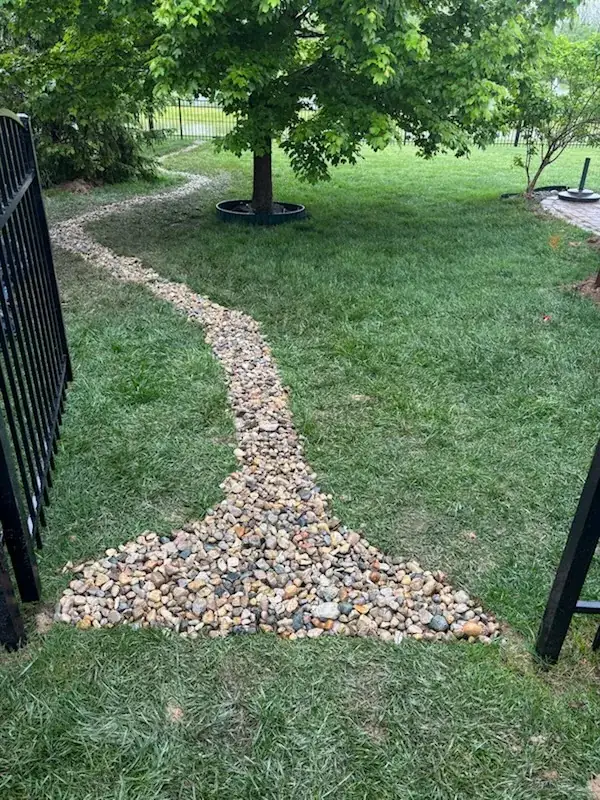
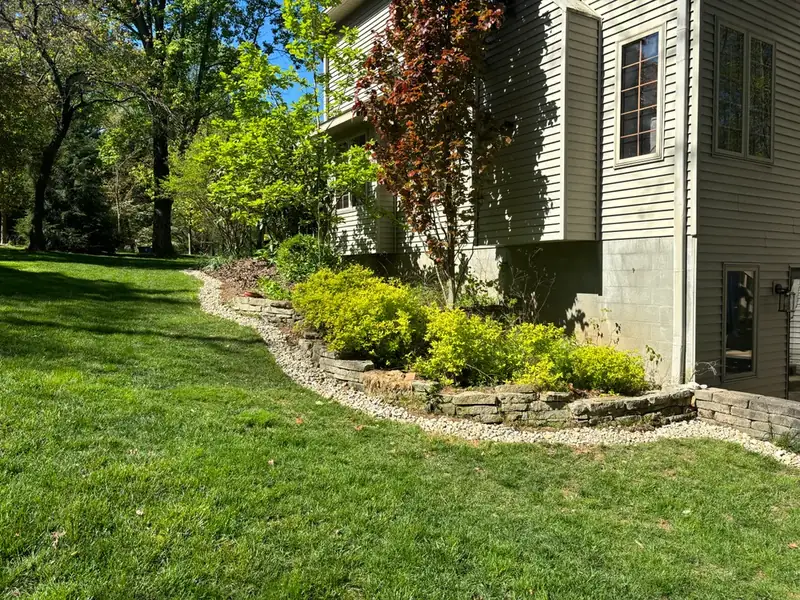
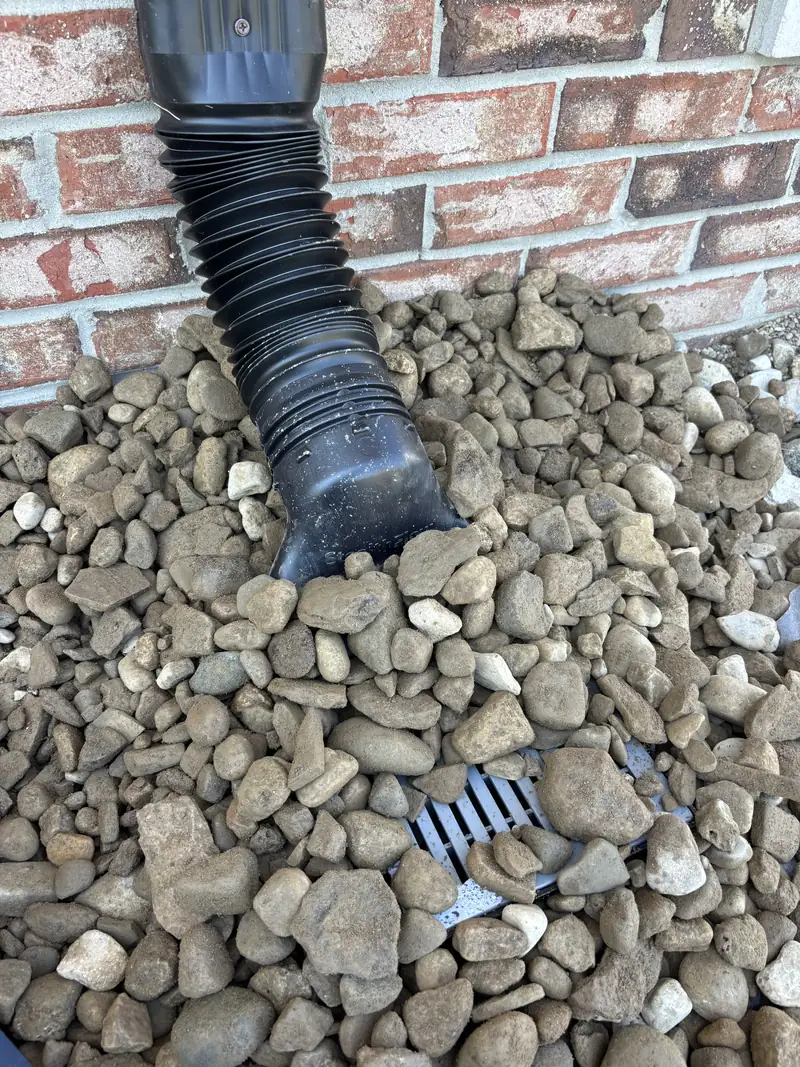
Wet yards we have traced back to their cause
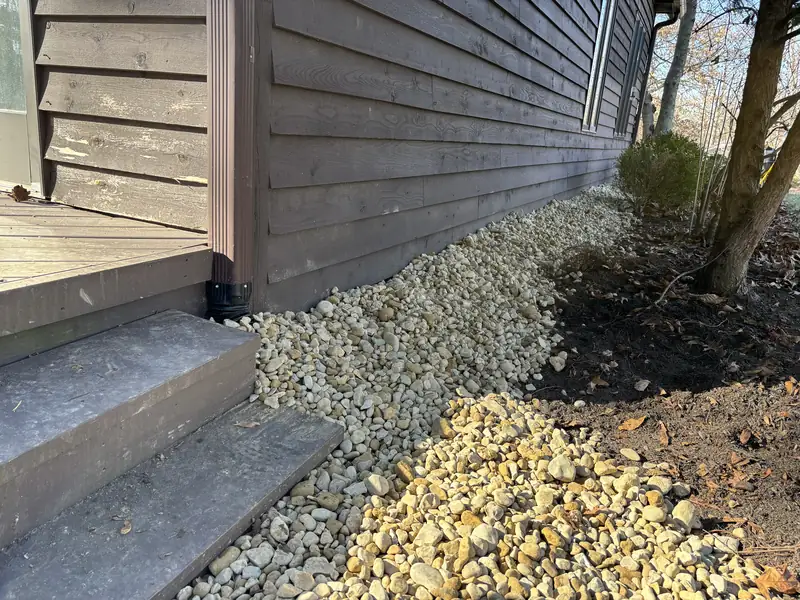
What it costs
Why the price depends entirely on the diagnosis
The four causes on this page do not cost the same to correct, so the price runs from a small buried downspout fix to a full yard system.
The things that actually move the price:
- Which cause you actually have. A downspout reroute is a fraction of the cost of a full drainage system.
- How much of the yard is affected. One wet corner is a very different job from a lot that drains poorly everywhere.
- Distance to a legal outlet. Longer runs to daylight or an approved discharge point add pipe and labor.
- Ground conditions. Hand-dug clay is slower to move in dry conditions than in spring.
- Whether more than one cause is present. A yard with both poor soil and a misdirected downspout may need more than one fix.
You get a fixed price for a defined scope after the on-site visit. Half holds the date, the balance is due when you have walked the finished job. We do not offer financing.
Related services, once you know your cause
What homeowners say
Wet yard questions
Answers before you call
Start by checking your downspouts and sump discharge line, since those are the easiest causes to rule out. If every downspout already carries water well away from the house and the wet spot still shows up, clay soil, compaction, or runoff from elsewhere are more likely, and those usually need a professional diagnosis to confirm.
Yes. Water moves downhill regardless of property lines, and a neighbor's regrading, a new patio, or simply a higher lot can send runoff onto your property with nowhere for it to go once it arrives. We check the grade across the boundary, not just inside your fence line, to see if this is happening.
Not the way we use the term. Our French drains go inside basements. For a wet yard it is usually a trench drain, a rock and fabric trench, or a pipe run from a downspout, depending on where the water comes from.
It is a common cause we see. Equipment used during construction compacts the soil beneath it, and that compacted layer can hold water like a shallow bathtub for years afterward. If your wet spot lines up with where a driveway, addition, or utility trench was built, this is worth checking first.
Yes, and it is not unusual. A yard with naturally poor clay drainage can also have a downspout adding to the same low spot, making the problem worse than either cause would be alone. Sorting out which portion each cause contributes is part of what the site visit is for.
We walk the wet area with you, check the grade, trace your downspouts and sump discharge, and look at the direction water arrives from during a rain if we can see it. From there we tell you plainly which of the causes on this page applies to your yard and give you a fixed price for the fix that actually addresses it.
Where to next?
Free estimate
Let us tell you which of the four you actually have.
Send the form and we will reply within about 30 minutes during business hours. The visit and the written diagnosis are free.
- Diagnosis first, product second
- Fixed written price for a defined scope
- Dug by hand, sod put back
- Serving all of Indiana from Kokomo and Bloomington