
Downspout extensions across Indiana
This is the smallest job on our list, and honestly, one of the most useful. Moving a discharge point a few extra feet sometimes solves a problem people were quoted thousands to fix.
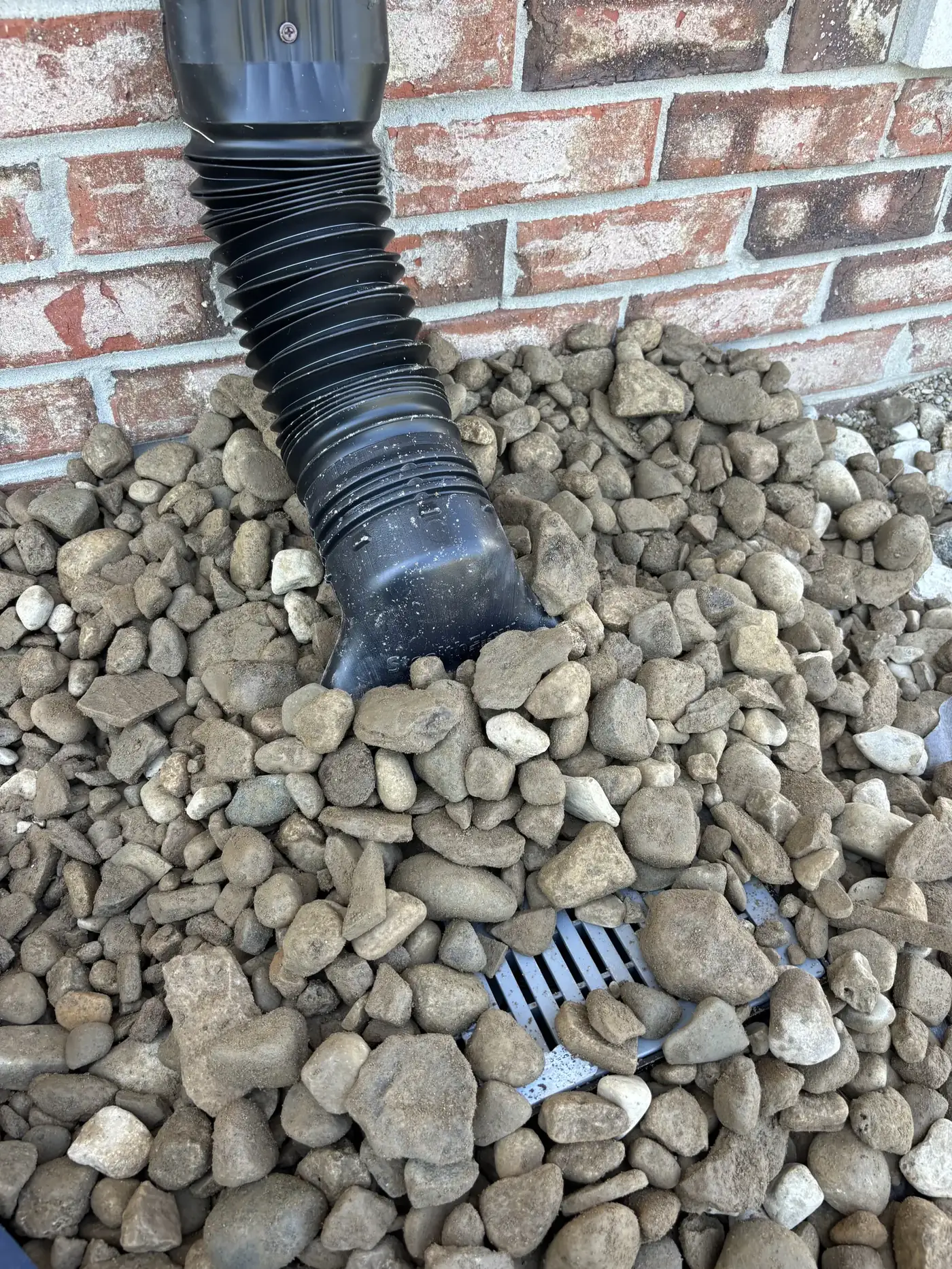
A downspout extension moves the discharge point of a downspout further from the foundation, either with an above-ground flexible or rigid tube or with a short run of buried solid pipe. It is the cheapest tool in the drainage toolbox, and on plenty of houses it is the only tool that job needs.
Splash blocks fail for a simple reason. They are a slab of concrete sitting loose on the ground under a downspout, and loose things move. Mowers clip them, freeze and thaw heave them, and a hard rain slowly walks them out of position until the water they were supposed to redirect just pools at the corner of the block instead. Even a splash block sitting exactly where it should is only rated to carry water about two feet from the wall.
Two feet is not far enough. Indiana's residential code, IRC R401.3, calls for the ground to fall at least 6 inches within the first 10 feet from the foundation. A splash block barely gets you past the first stride of that zone. An extension, above ground or buried, is built to clear the whole thing.
If an extension will not carry the water far enough, here is where downspout water should go instead.
Signs you need this
What tells you a splash block has stopped working
- You have found the splash block sitting somewhere other than where you left it more than once.
- The soil right under the downspout is a worn, muddy dip instead of grass.
- Water is still puddling within a few feet of the wall after the block does its job.
- The mower keeps knocking the block or a plastic extension out of position.
- You are patching the same small wet spot at a corner of the house every spring.
- An otherwise dry yard has one soggy patch, and it is directly under a downspout.
How we do it
Matching the fix to the yard
-
Check the grade first
We shoot the slope from the downspout out to where the yard levels off. If the ground already falls away cleanly, an extension alone can solve the whole problem for very little money.
-
Pick above-ground or buried
A flat, well-drained yard with room to run a hose-style extension across the grass is a candidate for an above-ground fix. A yard that needs the pipe out of the way of mowing or foot traffic gets a short buried run instead.
-
Extend past the 10-foot zone
Whichever style we use, the discharge point lands past the first 10 feet from the wall, the zone the code says has to fall at least 6 inches. That is the actual target, not an arbitrary length of pipe.
-
Anchor or bury the run
Above-ground extensions get pinned so they stop migrating. Buried runs go in a shallow trench with solid pipe and a clean pop-up or rock bed outlet.
-
Set the outlet clear of foot traffic
The discharge point ends somewhere it will not become the next tripping hazard or mower obstacle, whether that is a rock bed, a low spot in the lawn, or a bed line.
Options compared
Splash block versus extension versus buried line
| Factor | Splash block | Above-ground extension | Buried extension |
|---|---|---|---|
| Cost | Lowest, often already on the house | Low, a small parts and labor job | Moderate, the smallest of our buried jobs |
| Durability | Shifts and cracks over a few seasons | Holds if pinned down, can still get knocked loose | Nothing to knock loose once it is covered |
| How far it moves water | About 2 feet | 6 to 10 feet, sometimes more | 10 feet or further, sized to the yard |
| Mower safety | Gets clipped constantly | A hazard until it is anchored or removed for mowing | Nothing above ground to hit |
| Freeze behavior | Not applicable, it is a block | Can ice over and back up in a hard freeze | Buried below the surface disturbance, drains between storms |
| Appearance | Visible concrete slab at the wall | Visible tube across the yard | Invisible once the sod is back down |
Recent work
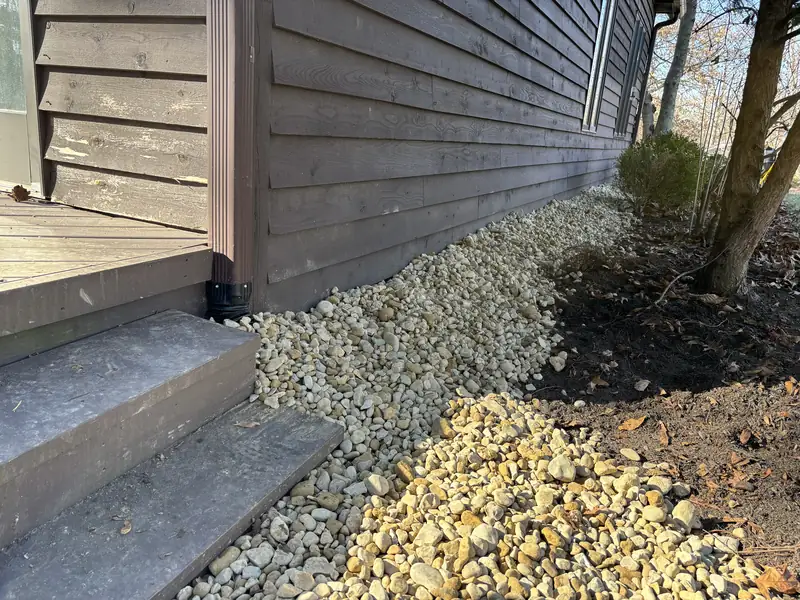
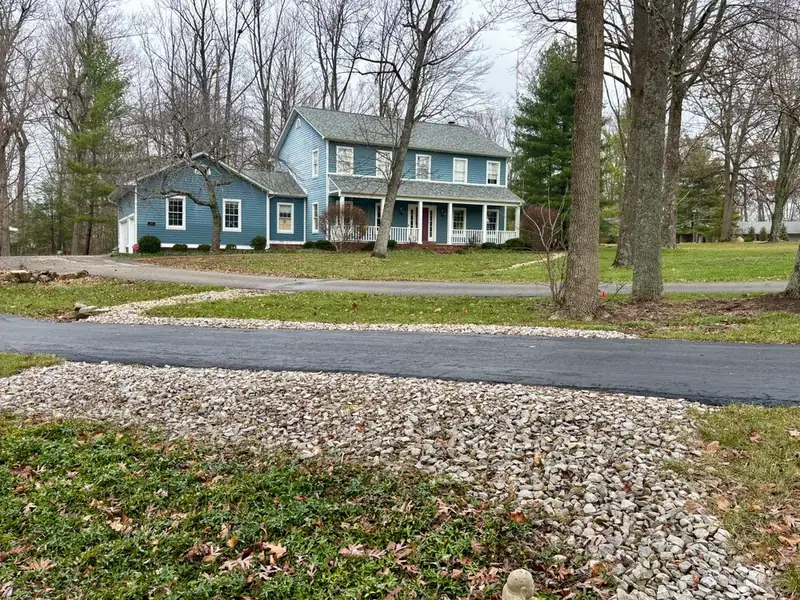
Extensions we have put in
What it costs
The honest number
This is a low ticket job compared to the rest of what we do. If your only problem is one or two downspouts discharging too close to the wall, this should be one of the smaller invoices you get from us all year.
The things that move the price on a job this size:
- How many downspouts. One extension is a quick visit. Six is closer to a half day.
- Above-ground or buried. Buried takes more labor for a cleaner, more permanent result.
- What is in the way. A patio, a fence, or a bed the run has to cross adds time.
You get one fixed number after we look at the yard. If a full buried downspout line or a foundation swale would actually serve you better, we will tell you that instead of upselling a fix that will not hold.
Often quoted alongside this
What homeowners say
Downspout extension questions
Answers before you call
Often, yes, if the rest of the grade already falls away from the house. An extension only moves the discharge point further out. If the yard beyond that point is level or sloped back toward the foundation, the water still finds its way back regardless of how far you push it. We check the grade before recommending which fix fits.
Because a splash block only moves water about two feet, and it does not stay put. It shifts with mowing and freeze and thaw, and once it clogs with grass clippings or leaves, water goes right around it instead of over it. An extension covers real distance and, if buried, does not move at all.
Far enough to clear the first 10 feet from the wall, which is the zone Indiana's residential code says has to fall at least 6 inches. That is the target we design toward, not an arbitrary length of tube.
They can. An above-ground tube sitting on frozen ground will ice over during a thaw-and-refreeze cycle, which is common in central Indiana winters, and water backs up at the downspout until it clears. A buried run sits below that surface freeze-thaw disturbance and keeps draining between storms.
An above-ground extension can, unless it is pinned flat or you remove it before mowing and reattach it after. A buried extension solves that entirely because there is nothing left above the grass line to catch a mower blade or trip over.
When more than one or two downspouts need correcting, or when the discharge needs to travel well past what a short extension can reasonably cover. At that point a buried downspout drainage system with a shared main line and cleanouts is usually the better value than several separate extensions.
Where to next?
Free estimate
A small job, worth a phone call.
Send the form and we will reply within about 30 minutes during business hours. The visit and the written quote are free, even for a small job like this one.
- Above-ground or buried, whichever fits your yard
- Fixed written price for a defined scope
- No upsell if a simple fix is all you need
- Serving all of Indiana from Kokomo and Bloomington