
Drainage contractor in Indianapolis, IN
Marion County built its sewers, its tunnels and its levees around one problem: this ground does not drain on its own. The White River just proved that again this month. Here is what an old city with new infrastructure means for your lot.
Local conditions
What is under your yard in Indianapolis
- THE COUNTY'S OWN SOIL GUIDE SAYS TILE DRAINAGE WORKS Marion County is dominated by Brookston and Crosby soils, both flagged by the county's own soil survey as a wetness management concern. That same guide states plainly that these soils "respond well to tile drainage," which is the whole basis of what we install. Marion County Soil and Water Conservation District
- FOUR CREEKS AND A RIVER MOVE THROUGH THE CITY The White River is the backbone, joined by Fall Creek, Eagle Creek, Pleasant Run and Pogues Run. Every one of those channels sets the low point that a given neighborhood eventually drains toward, whether the surface grading admits it or not. Axios Indianapolis
- 43.63 INCHES A YEAR, HEAVIEST IN SPRING AND SUMMER NOAA's 1991 to 2020 normal for Indianapolis is 43.63 inches of precipitation, with spring at 12.78 inches and summer at 12.57 inches, well ahead of fall and winter. That puts the wettest stretch right when clay soil is already saturated from snowmelt. National Weather Service Indianapolis
- A RECORD CREST THIS MONTH On the White River, the gauge at 82nd Street hit 21.18 feet in August 2026, a 113-year record that broke the 1913 benchmark. Ravenswood, Rocky Ripple and north Broad Ripple flooded, and a federal emergency was declared. Axios Indianapolis
- A $2 BILLION TUNNEL RUNS 250 FEET UNDER THE CITY Citizens Energy Group's DigIndy tunnel system runs 28 miles at 18 feet in diameter, 250 feet underground, holding 250 million-plus gallons, built to capture at least 95 percent of combined sewer overflow into the White River, Fall Creek and Pogues Run. Citizens Energy Group, DigIndy
- STORMWATER FEES ARE BASED ON MEASURED IMPERVIOUS AREA The Marion County Stormwater Management District bills each parcel by its measured impervious area, and Indianapolis DPW's code covers the consolidated city. Beech Grove, Lawrence, Southport, Speedway and Cumberland each run their own separate stormwater systems. Marion County stormwater code summary
Indianapolis, specifically
An old city, a new tunnel, and a lot of clay in between
Indianapolis is not a young city, and its drainage problems are not new either. This month made that obvious. The White River crested at 21.18 feet at the 82nd Street gauge, breaking a record that had stood since 1913, and the water reached Ravenswood, Rocky Ripple and the north end of Broad Ripple. A river does not set a 113-year record because of one bad storm. It sets one because the ground around it has been paved, roofed and graded for more than a century, and every one of those changes sends water somewhere else faster than it used to move.
Underneath that river system sits Marion County's actual soil, and the county's own soil survey does not sugarcoat it. Brookston and Crosby, the two soils that dominate the county, are flagged as a wetness management concern, sitting in depressions and flats with a seasonal high water table that can reach the surface. The same document says these soils "respond well to tile drainage." That is not our marketing language. That is the Marion County Soil and Water Conservation District describing the ground under your yard.
The city has spent real money on the big-picture version of this problem. Citizens Energy Group's DigIndy tunnel runs 28 miles of pipe 18 feet across, 250 feet below the surface, built at a cost near $2 billion to hold more than 250 million gallons of combined sewer overflow before it can reach the White River, Fall Creek or Pogues Run. It is designed to capture at least 95 percent of that overflow. That tunnel protects the river. It does not touch what happens between your downspout and your foundation.
That gap is where most Indianapolis calls start. A lot of this city's housing stock is old enough that its drainage assumptions are older still. Median construction year across the city runs around 1973, and roughly 36.7 percent of homes were built before 1970. A pre-war Meridian-Kessler house, built out mostly from the early 1920s through the end of World War II, was graded to a standard nobody wrote down and a foundation type nobody upgraded since. A post-war ranch on a slab or shallow crawlspace has its own version of the same issue: seventy-plus years of settled backfill and a downspout system that was never meant to handle a 2026 storm.
Citizens Energy Group runs a program called Correct Connect specifically because so many of those older connections turned out to be wrong. Downspouts and sump pumps tied into the sanitary sewer instead of the storm system cause basement backups and add clean rainwater to a system meant for wastewater. They offer free dye testing to find out which pipe a downspout is actually feeding. That distinction, sanitary versus storm, is not a technicality here. It is the difference between water leaving your property cleanly and water backing up into your own basement during the next big rain.
On top of all that, the city bills stormwater by measured impervious area under the Marion County Stormwater Management District, which covers the consolidated city but not Beech Grove, Lawrence, Southport, Speedway or Cumberland, each of which runs its own separate system. Knowing which system your address actually falls under changes where a legal discharge point is. We check that before we design anything, because guessing wrong means redoing the work.
Parts of Indianapolis we work in
Indianapolis neighborhoods and landmarks we know well. This is coverage information, not a list of links.
Broad Ripple Meridian-Kessler Irvington Fountain Square Rocky Ripple Ravenswood Mars Hill near the Monon Trail along the White River Fall Creek corridor Eagle Creek area Pleasant Run corridor Pogues Run area
What we install here
Services in Indianapolis
- Yard Drainage For Brookston and Crosby clay yards
- French Drain Inside the basement, cut in along the wall
- Downspout Drainage Routed away from the sanitary side
- Downspout Extension Often the first Correct Connect fix
- Trench Drain Hand-dug, rock-covered drains through the yard
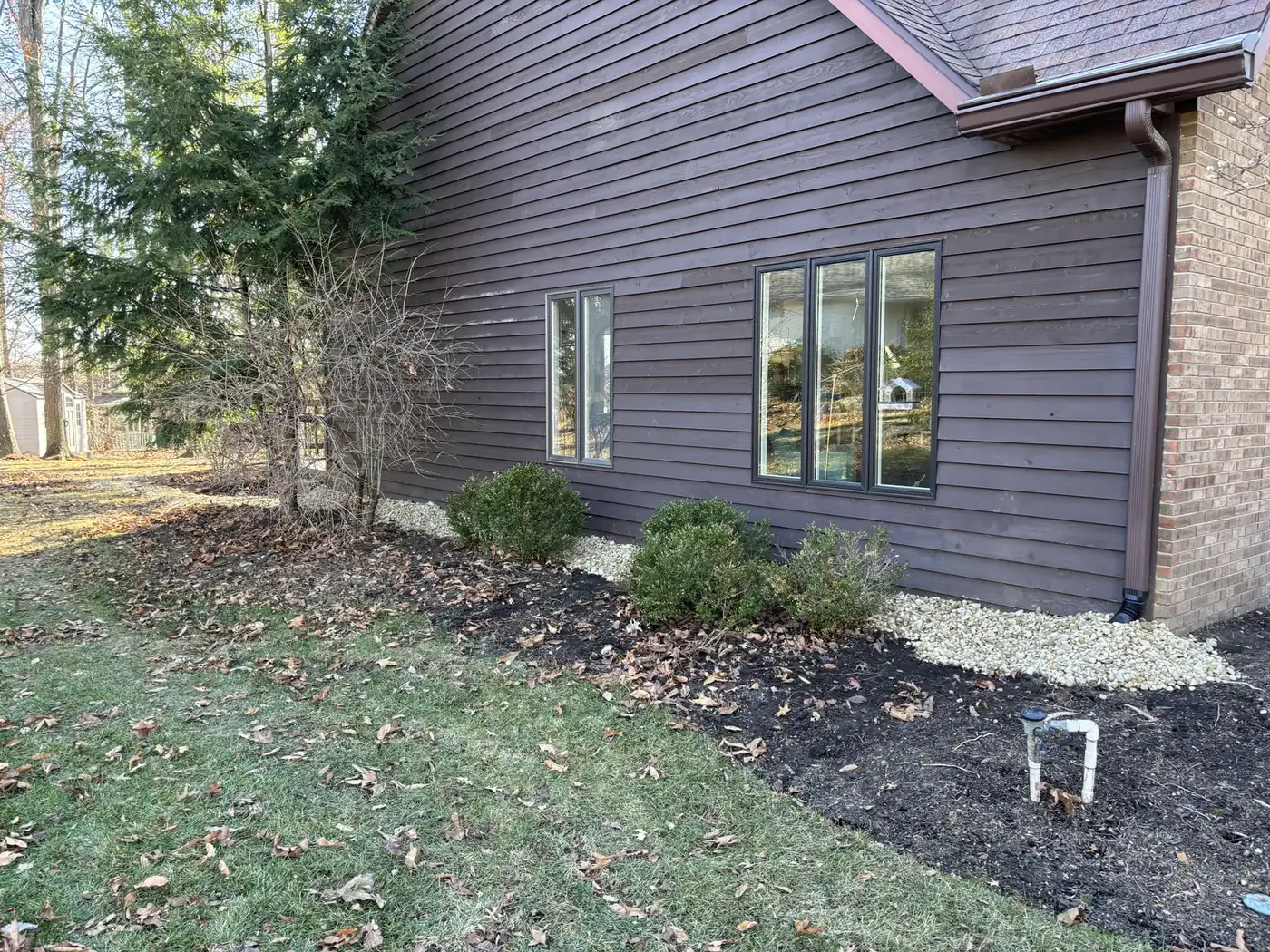
- Foundation Swale A rock-covered trench along the house
- Wet Yard Solutions When the county soil guide is the reason
- Wet Basement Solutions Pre-war block and stone foundations
- Crawlspace Solutions Common under post-war ranches
- Sump Pump Installation Correctly connected, not to the sewer
- Stone Walkway Creation Finish work in the same visit
Correct Connect and the sanitary line problem in Indianapolis
Citizens Energy Group runs a program called Correct Connect aimed squarely at downspouts and sump pumps that were, at some point in a home's history, tied into the sanitary sewer instead of the storm system. That connection sends clean rainwater into pipes built for wastewater, which is a direct cause of the basement backups and sewer overflows the utility is trying to reduce. They offer free dye testing so a homeowner can actually see where a given pipe drains to.
This matters for us because it is the exact mistake we design around. Every downspout and foundation line we run gets a storm-side outlet, whether that is daylight, a swale, or a legal storm structure, never a sanitary cleanout. On an older Indianapolis property, we will not assume the existing connection is correct. We check it.
We confirm what applies to your address during the free estimate and explain it before we dig. Citizens Energy Group, Correct Connect.
Nearby towns we work in
- Greenwood
- Avon
- Brownsburg
- Bargersville
- Geist
- McCordsville
- Fortville
Reviews from around Indiana
These come straight from our Google Business Profile, including the reviewer's own town.
Indianapolis questions
What Marion County homeowners ask
No, and that is a common mix-up. DigIndy is a 28-mile tunnel system 250 feet underground built to hold combined sewer overflow before it reaches the White River, Fall Creek and Pogues Run. It protects the river during heavy rain. It has no connection to whether water pools in your side yard or seeps into your crawlspace, because that water never gets near a sewer main in the first place.
Your yard's drainage depends on the grade, the soil and where your downspouts actually discharge, not on infrastructure two hundred and fifty feet down.
Citizens Energy Group's Correct Connect program offers free dye testing to confirm where a pipe actually drains. A lot of older Indianapolis homes have a sump or downspout tied into the sanitary sewer from a decades-old renovation, which sends clean rainwater into a system built for wastewater and adds to backup risk during a storm.
When we install or reroute a sump discharge line, we run it to a storm-side outlet and confirm the existing connection before we call the job done.
It usually does. Meridian-Kessler's main build-out ran from the early 1920s through the end of World War II, so the grading around most of those foundations reflects an era with different drainage standards, and the yards have had roughly a century of tree growth, settling and additions since. Older masonry and block foundations in particular can be more sensitive to standing water at the wall.
We start with what the grade is doing today, not what it was designed to do in 1935.
Yes. Those cities and towns run their own separate stormwater systems apart from the Marion County Stormwater Management District, so the rules and permitted outlets can differ from the rest of Indianapolis. We check which jurisdiction actually applies to your address before we design a discharge point.
The record crest at the 82nd Street gauge, 21.18 feet, put water into Ravenswood, Rocky Ripple and north Broad Ripple this month. If your property is near the White River, Fall Creek, Eagle Creek, Pleasant Run or Pogues Run, it is worth having your grade and outlet points checked even if this event did not reach your lot directly, since river-adjacent ground behaves differently after a record crest.
Where to next?
Free estimate in Indianapolis
Big infrastructure protects the river. We handle the rest of your lot.
Send the form and we will reply within about 30 minutes during business hours, or call and talk to a person now.
- Free on-site visit anywhere in Marion County
- Storm-side outlets only, never tied to sanitary
- Dug by hand, so Brookston clay does not get compacted
- Fixed written price before anything starts