
Sump pump installation across Indiana
The pump on the shelf almost never fails first. The pit around it, the valve behind it and the pipe leaving the house are where a sump system actually breaks down.
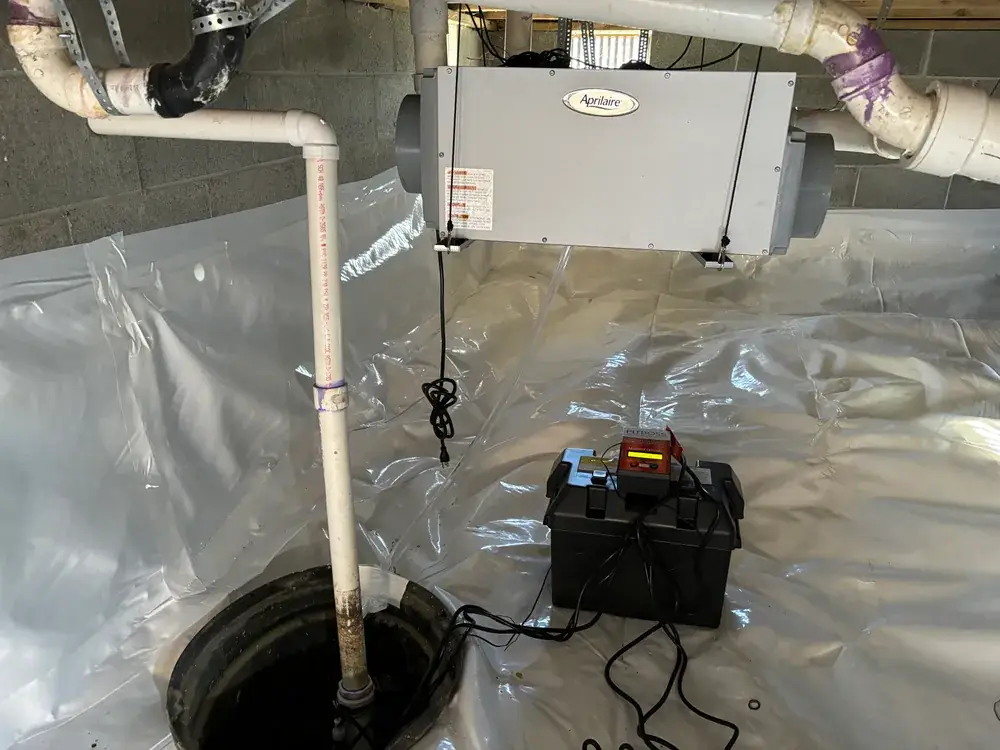
A sump pump installation is a pit, a pump, a check valve and a discharge line, sized to how much groundwater your actual house makes and routed to a legal, permanent place to send that water. The pump is the part homeowners think about. The discharge line is the part that gets installed wrong most often.
Sizing a pump is not a matter of buying the biggest one on the shelf. A pump sized to a catalog spec sheet instead of your house either short-cycles constantly on a small water load or gets overwhelmed the one time it matters. We size to what your basement or crawlspace actually produces during a hard rain, which we can estimate from the drainage feeding the pit and from how the existing system has been performing.
The bigger issue, and the one that gets a homeowner an actual notice in the mail, is where the water goes after it leaves the pump. A discharge line run into a floor drain, a laundry drain, or tied into the sanitary sewer is illegal in most Indiana jurisdictions and it is exactly what utilities are now checking for.
So we treat sizing and discharge routing as the two decisions that actually determine whether a sump system works for the life of the house, not just on install day.
Signs you need this
What homeowners describe when they call us
- The current pump runs constantly during a storm and you can hear it cycling every few minutes.
- There is no backup, and you already know a power outage during a storm means water on the floor.
- The discharge line dumps a foot from the foundation and the same water you just pumped out finds its way back into the pit.
- The pit has no lid, or the lid does not seal, and it smells like a drain.
- You got a letter or a notice from your city or utility about a sump discharge inspection.
- The pump is original to a house built decades ago and nobody has ever serviced it.
- Water backs up at the pit during heavy rain faster than the pump can keep up with it.
- You are finishing a basement and need a system in before drywall goes up, not after.
How we do it
The order we work in, and why the discharge line gets its own step
-
Size the system to your water, not a catalog number
We look at how much water the drainage feeding the pit actually produces during a hard rain and size the pump to that, not to whatever horsepower number sounds impressive on a box.
-
Set the pit and liner
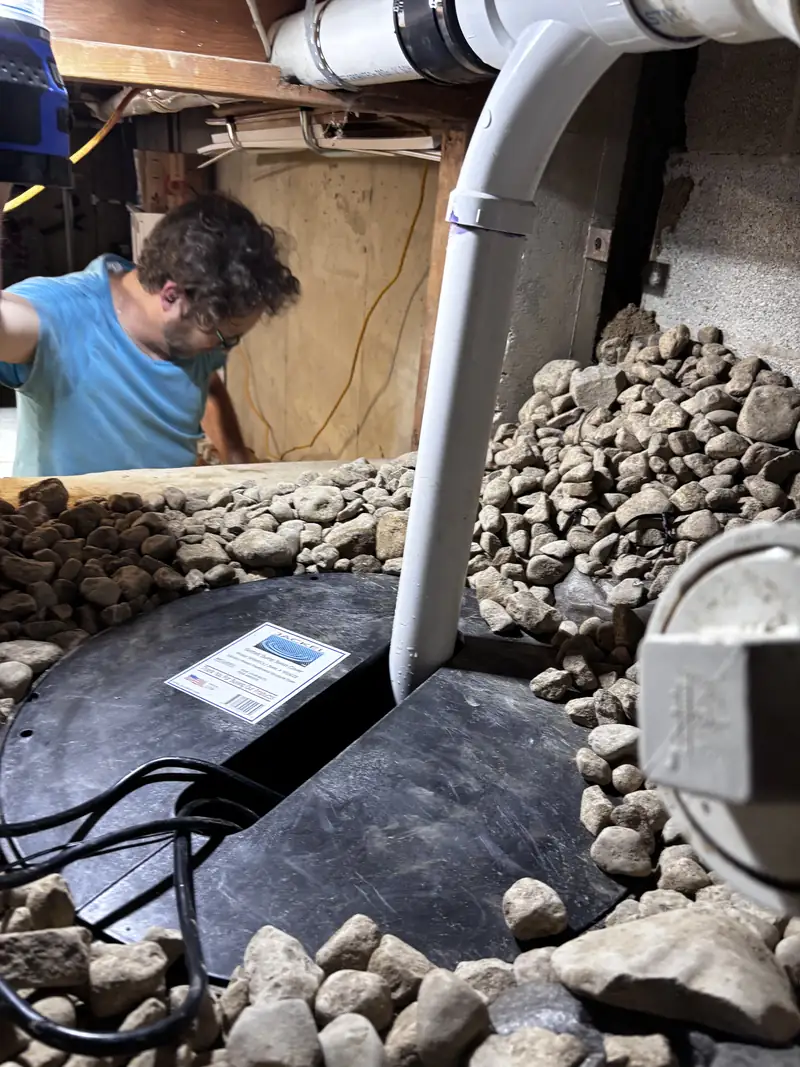
The pit gets a proper liner set into washed stone around it, not backfilled with native clay. Stone lets water reach the pump instead of the pit walls choking it off.
-
Install the primary pump and check valve
The check valve sits close to the pump on the discharge pipe so water cannot fall back into the pit and force the pump to lift the same water twice on every cycle.
-
Run the discharge line to a legal termination point
This is the step most sump installs get wrong. The line has to leave the house, clear the foundation, and end up somewhere the local rules actually allow, not the nearest floor drain or sewer cleanout.
-
Add freeze relief on the exterior run
An exterior discharge line without a freeze relief fitting can ice shut in a cold snap and back the whole system up right when you need it most.
-
Add battery backup and monitoring
PitBoss and PitBoss+ battery backup pumps take over automatically when the power goes out, which is exactly when a storm is most likely to overwhelm the primary pump. The plus model adds wifi monitoring so you get an alert on your phone instead of finding out in the basement.
-
Test the full cycle and walk it with you
We fill the pit, run the primary pump through a full cycle, simulate a power loss to confirm the backup kicks on, and show you where the discharge actually daylights before we call the job done.
Materials
What actually goes in
| Component | What we use | Why |
|---|---|---|
| Pit and liner | Sealed sump liner set into washed stone backfill | Washed stone gives incoming groundwater a clear path to the pit instead of clay choking it off. |
| Primary pump | PitBoss pump, sized to the water your drainage system actually delivers | A pump sized to a spec sheet instead of your house either short-cycles or gets overwhelmed. Neither is what you paid for. |
| Check valve | Spring-loaded check valve set close to the pump on the discharge pipe | Stops discharged water from falling back into the pit and forcing the pump to lift it again on the next cycle. |
| Discharge pipe | Solid PVC, routed to a compliant termination point away from the sanitary sewer | Where this pipe ends is the single most regulated part of a sump install in Indiana right now. |
| Freeze relief | Freeze relief fitting on the exterior discharge run | Without it, a frozen discharge line backs the whole system up during the exact cold snap you need it working. |
| Battery backup | PitBoss+ battery backup pump | Takes over automatically when the power fails, which is precisely when a storm is most likely to overwhelm the primary. |
| Monitoring | Wifi monitoring on the PitBoss+ system | Sends an alert to your phone on pump activation or a fault, instead of you finding out from a wet floor. |
| Discharge termination | Pervious surface, at least 25 feet from property and easement lines where local ordinance requires it | Matches the standard several central Indiana cities now enforce, and keeps discharged water from recycling straight back to the pit. |
Recent work
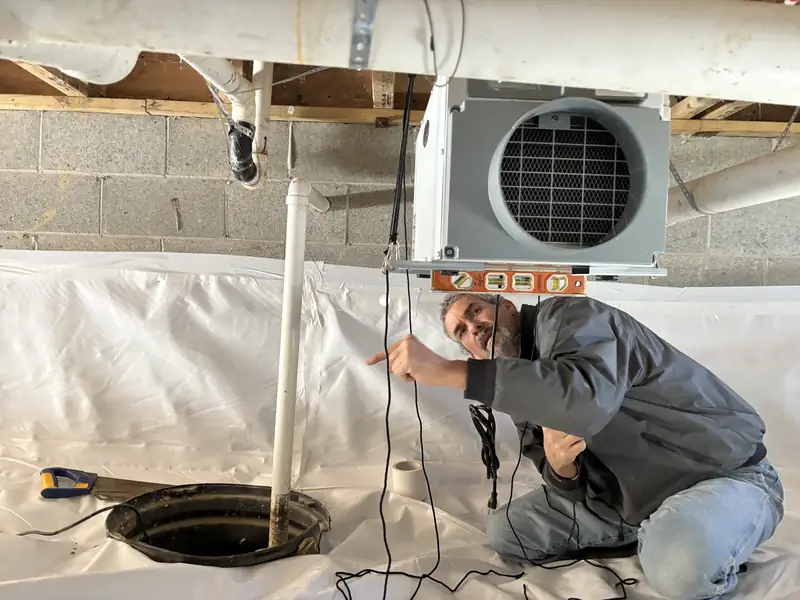
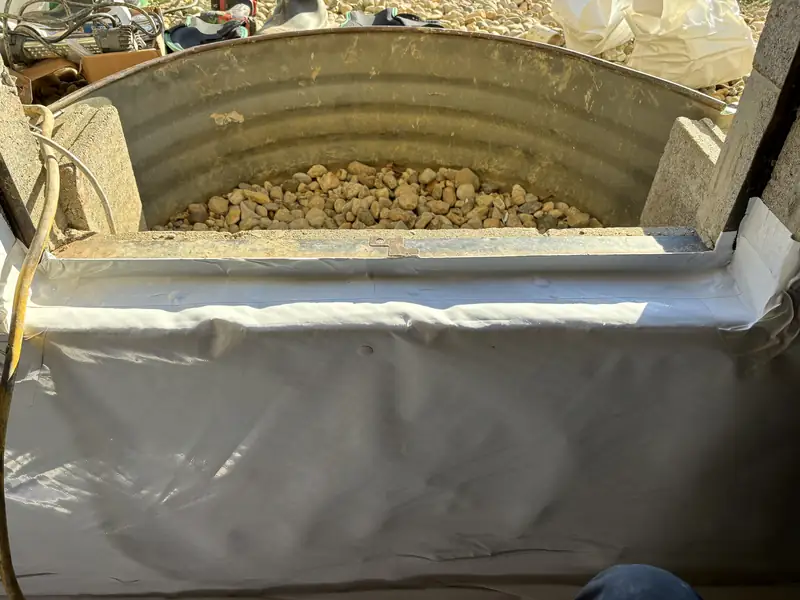
Sump systems we have put in
What it costs
What moves the number
A straightforward primary pump replacement into an existing pit sits at the low end. A full new pit, primary and battery backup pump, wifi monitoring and a discharge line run to daylight across a full yard sits at the high end.
The things that actually move the price:
- Whether the pit already exists. Setting a new pit and liner in a slab is more work than dropping a new pump into an existing pit.
- Discharge distance and grade. A short run to daylight costs far less than trenching a line 60 feet across a yard to reach a legal termination point.
- Battery backup and monitoring. Adding PitBoss+ with wifi monitoring is more equipment than a primary pump alone.
- Compliance work. If a discharge line needs to be disconnected from a sanitary tie-in and rerouted, that is separate scope from a straightforward pump swap.
- Ground conditions. Rock, roots or a driveway crossing in the discharge path all add time.
- Whether the crawlspace or basement needs its own dedicated system. Multiple pits on one property is more than a single pump job.
You get one fixed number for a defined scope after the on-site visit. Half holds the date, the balance is due when the system is tested and you have watched it cycle. We do not offer financing.
Often quoted alongside this
What homeowners say
Sump pump questions
Answers before you call
No, and in most of central Indiana that connection is actively being enforced. In Indianapolis, Citizens Energy Group runs a program called Correct Connect that targets sump pumps and downspouts illegally tied into the sanitary sewer and offers dye testing to find them. A discharge line has to go to a storm system or a pervious surface outside, not down a floor drain or a sewer cleanout.
Carmel ordinance S-74-18 requires sump pumps to be disconnected from the sanitary sewer and discharged onto a pervious surface at least 25 feet from property and easement lines. The work has to be done by a licensed plumber and inspected by the city's Engineering Department. Carmel also offers reimbursement credits up to $600 per structure, including $250 for a direct storm sump connection and $50 for a diverter valve, so it is worth checking what you qualify for before the work starts.
Usually because the discharge is recycling straight back into the pit. If the line ends too close to the house, the water it just pumped out soaks back into the ground and returns to the same pit within minutes. Moving the termination point further out, and correcting the grade around it, is the fix. It is rarely a sign the pump itself is failing.
If your basement or crawlspace matters to you, yes. A primary pump has no backup power source of its own, and storms that produce the most water are the same storms most likely to knock out electricity. A pump with no backup is a pump that fails at the exact moment you needed it most. The PitBoss+ system takes over automatically and, with wifi monitoring, tells your phone it did.
By the water your specific house makes, not by the biggest horsepower number on the shelf. We look at what is feeding the pit, the drainage tying into it and how the existing system has performed, and size the pump to that load. Oversized pumps short-cycle and wear out early. Undersized pumps get overrun in a real storm.
Yes, with a freeze relief fitting on the exterior discharge run. Without one, ice forms a plug in the pipe and backs the whole system up right when a winter storm is putting the most water through it. It is a small fitting that solves a problem homeowners otherwise deal with every single January.
Where to next?
Free estimate
Let us size the pump and route the discharge correctly, the first time.
Send the form and we will reply within about 30 minutes during business hours. The visit and the written quote are free.
- Sized to the water your house actually makes
- PitBoss and PitBoss+ battery backup with wifi monitoring
- Discharge routed to a compliant termination point
- Serving all of Indiana from Kokomo and Bloomington