
Stone walkways built by the drainage crew
We are not a hardscape company. We are drainage people who already have the grade, the stone and the trench open, and a walk is the finish work that comes with that.
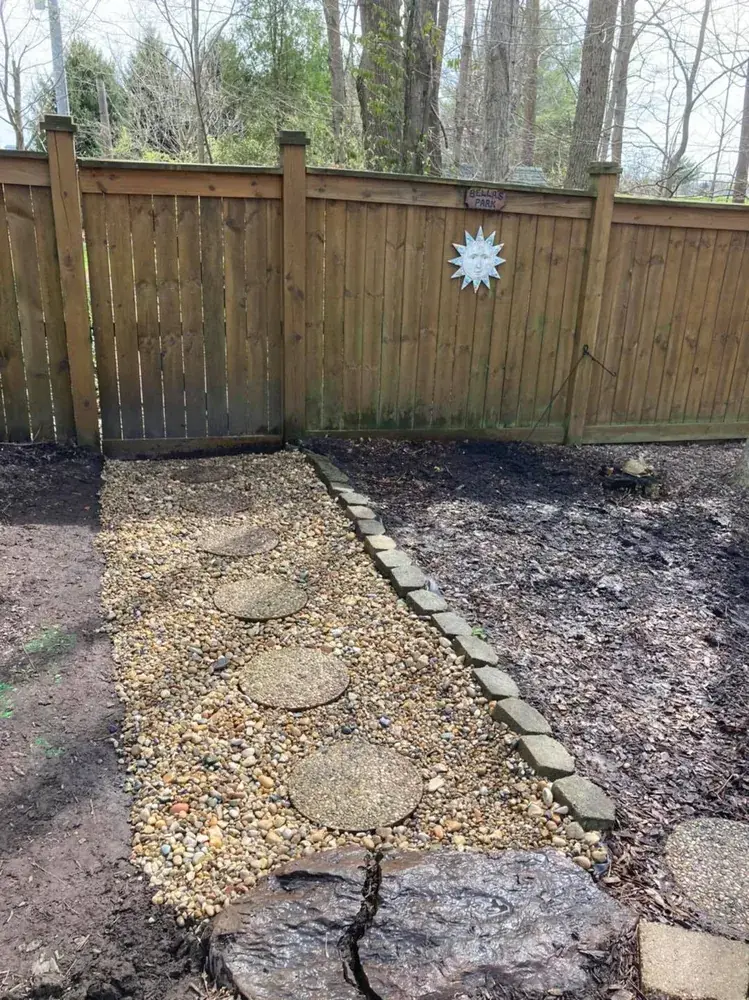
A stone walkway that lasts through an Indiana winter is built on a compacted aggregate base deep enough to resist frost heave, not laid straight on the clay underneath it. We add walkways to our work because we are already moving stone, opening trenches and setting grade on the same property, and a path is the natural finish to that work.
We want to be straight about what this service is and is not. We are not a full hardscape company. We do not pour patios, build retaining walls, or install pavers as a standalone business line. What we do is drainage, by hand, and a stone walkway uses the same skills as a trench drain or a foundation swale. If we are already running a trench drain or a rock bed along your fence line, tying a walk into that same work is often a smaller add than starting a walkway from scratch would be.
A path set directly on Indiana's clay-heavy soil, the Crosby, Brookston, Miami and Kokomo series that USDA soil surveys rate as somewhat poorly to very poorly drained, heaves and settles unevenly by the second or third winter. Stones tip, gaps open, and the low spots hold water. The fix is the same one we use everywhere else on your property: get the water out of the base before it can freeze and lift the surface.
Signs you need this
What tells us a walk needs to be rebuilt, not patched
- Individual steppers or flagstones rock underfoot when you step on the edge.
- Gaps have opened between stones that used to sit tight.
- Water stands in low spots on the path after a rain instead of draining off to the side.
- The path is bare dirt or scattered mulch and turns to mud within a season.
- An existing walk noticeably heaves or dips more each winter.
- You are already having drainage work done nearby and want the finish work to match.
- A muddy trail has worn into the lawn where people actually walk, whether or not a path exists there.
- The current path dams water across the lawn instead of letting it pass under or beside it.
How we do it
The base is the job. The stone on top is the easy part.
-
Lay out the path and set cross slope
We walk the route with you first, then set a slight cross slope across the finished path so it sheds rainwater to one side instead of holding it or damming it across the lawn.
-
Excavate to depth
We dig out to a depth that gives the base room to do its job, deeper for a full rock-bed path or flagstone, shallower for a simple stepper path through grass.
-
Lay geotextile fabric
Fabric goes down before the base stone, separating it from the clay subgrade underneath. Without it, base stone works its way down into soft clay over a few seasons and the surface settles unevenly.
-
Compact the aggregate base
Compacted aggregate base is what actually resists frost heave. This is the step that separates a path that lasts from one that does not, and it is the same skill we use building a drainage bed.
-
Set the bedding layer and stone
A leveling bedding layer goes on top of the compacted base, then the stone itself, stepper, flagstone or a full rock bed, is set and leveled piece by piece.
-
Set edge restraint and joint treatment
Edge restraint keeps the base material from washing or spreading out from under the stones over time. Joints between stones get filled with sand or fine gravel depending on the stone type and how the path will be used.
-
Tie into existing drainage where the path crosses it
If the walk crosses a drainage bed or a swale we are also building, the two get built as one system, not two projects that happen to sit next to each other.
Materials
What actually goes in
| Component | What we use | Why |
|---|---|---|
| Excavation depth | Sized to path type, deeper for flagstone and full rock-bed paths, shallower for steppers | The base needs room to work. A shallow dig under a heavy flagstone path is the most common reason those paths heave first. |
| Geotextile | Non-woven geotextile fabric between subgrade and base | Keeps base stone from migrating down into the clay underneath, which is what causes uneven settling. |
| Aggregate base | Compacted crushed aggregate, compacted in lifts | This layer resists frost heave. It is the same base-building work we do under every drainage bed on the property. |
| Bedding layer | Leveling sand or fine bedding stone over the compacted base | Gives each stone a level, adjustable surface to seat into rather than resting unevenly on the base itself. |
| Stone type | Stepper, flagstone, or full rock-bed path, matched to the site and how it will be used | A garden stepper path and a main entry walk carry different loads and need different stone. |
| Joint treatment | Polymeric sand or fine gravel between stones, depending on stone type | Locks stones in place and keeps weeds and washout from opening the joints back up. |
| Edge restraint | Steel or rigid plastic edging along the path perimeter | Keeps base material and stone from spreading outward under foot traffic and freeze and thaw cycles. |
| Cross slope | Slight fall set across the finished path width | Sheds rain off the path surface instead of letting it pool or dam across the surrounding lawn. |
Recent work
Walkways we have built
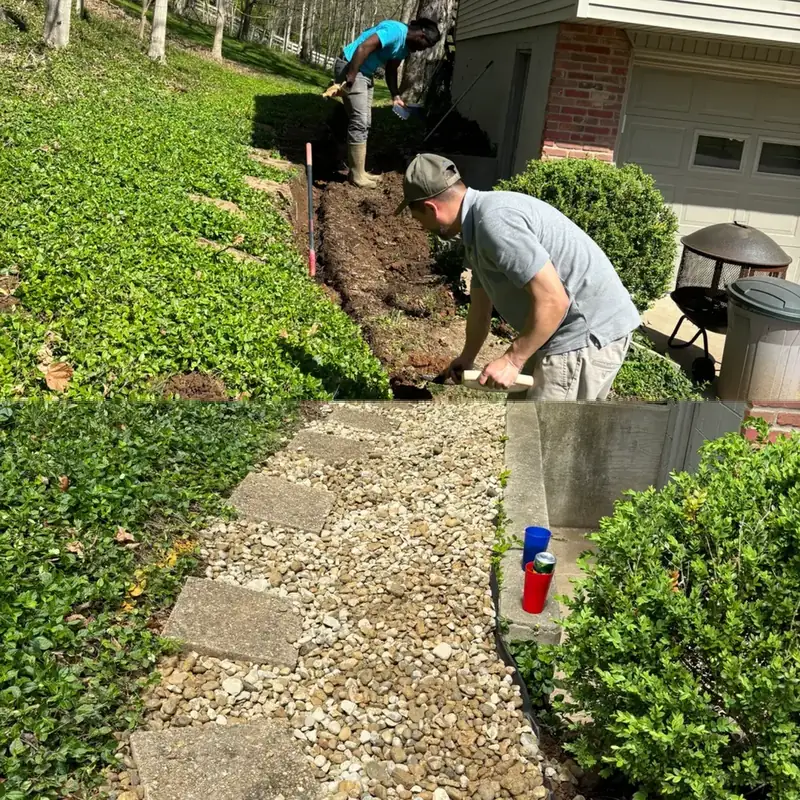
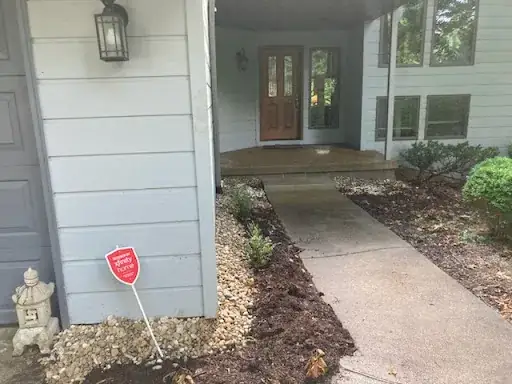
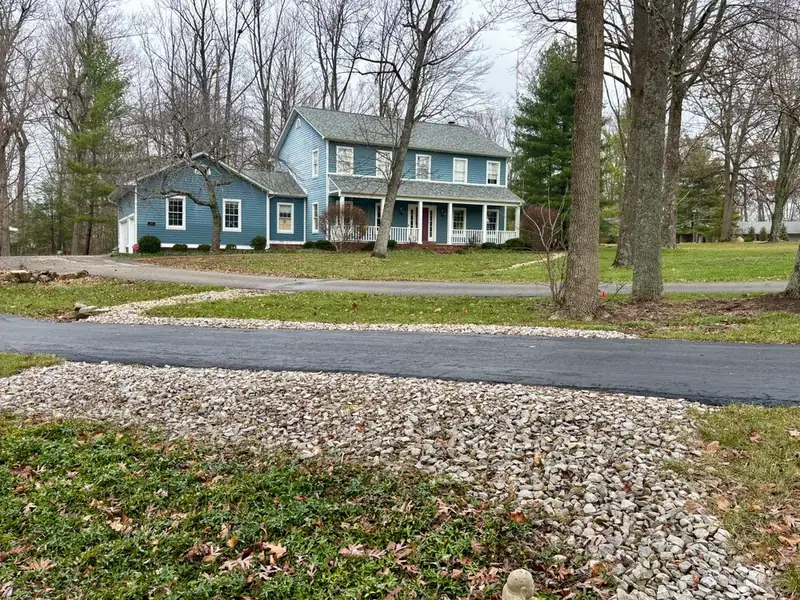
What it costs
What moves the number
A short stepper path added onto a drainage job you are already having done is a small add-on. A long, wide flagstone entry walk built as its own project is a bigger job.
The things that actually move the price:
- Length and width. More path is more excavation, more base stone and more setting time.
- Stone type. A simple stepper path costs less than a tight-jointed flagstone walk.
- Whether we are already on site for drainage. Adding a walk to an existing dig is more efficient than a standalone project.
- Grade changes. Steps or a sloped section take more time to set than a flat run.
- Access. A backyard path reached only through a narrow gate slows material movement.
- Whether the path ties into a drainage bed. Building the two as one system is efficient scope, not two separate jobs.
You get one fixed number for a defined scope after the on-site visit. Half holds the date, the balance is due when you have walked the finished path. We do not offer financing.
Often quoted alongside this
What homeowners say
Stone walkway questions
Answers before you call
No. We are a drainage company, not a full hardscape contractor, and walkways are the one piece of finish work we offer because it uses the same base-building skill as our drainage jobs. If you need a patio, a retaining wall or a full landscape build, that is outside what we do.
Because it was set directly on clay soil without a proper compacted base underneath it. Central Indiana's clay-heavy soils hold water, and when that water freezes it expands and lifts whatever is sitting on top of it. A path built on compacted aggregate over geotextile fabric gives water somewhere to go instead of trapping it under the stone.
Yes, and it often makes sense financially. If a walk needs to cross a swale or a rock-bed drain we are already installing, building both as one connected system is more efficient than treating the path as a separate later project. Ask us about it during the same estimate.
It depends on how the path gets used. A stepper path set in grass or gravel suits a garden route or a side yard with light foot traffic. A tight-jointed flagstone walk suits a main entry that gets used daily, in all weather, often carrying groceries or a stroller. We will tell you honestly which one fits your traffic before you pay for the more expensive option.
Not if it is built correctly, and it can actually help. A path with no cross slope acts like a small dam across your lawn, holding water on the uphill side. We set every path with a cross slope that sheds water off to the side instead of damming it, and where it makes sense we tie the path into your drainage rather than working against it.
No. We hand dig and hand set walkways the same way we hand dig drainage trenches, which is why we can put a path back through an established yard without tearing up the lawn around it to get equipment in.
Where to next?
Free estimate
Let us build a path that survives Indiana winters.
Send the form and we will reply within about 30 minutes during business hours. The visit and the written quote are free.
- Compacted base built to resist frost heave
- Cross sloped so the path sheds water, not dams it
- Dug by hand, grass and beds put back
- Serving all of Indiana from Kokomo and Bloomington