
French drain vs trench drain: what is the difference?
One goes inside your basement. The other goes out in your yard. They fix different problems, so it helps to know which one you have before anybody quotes you.
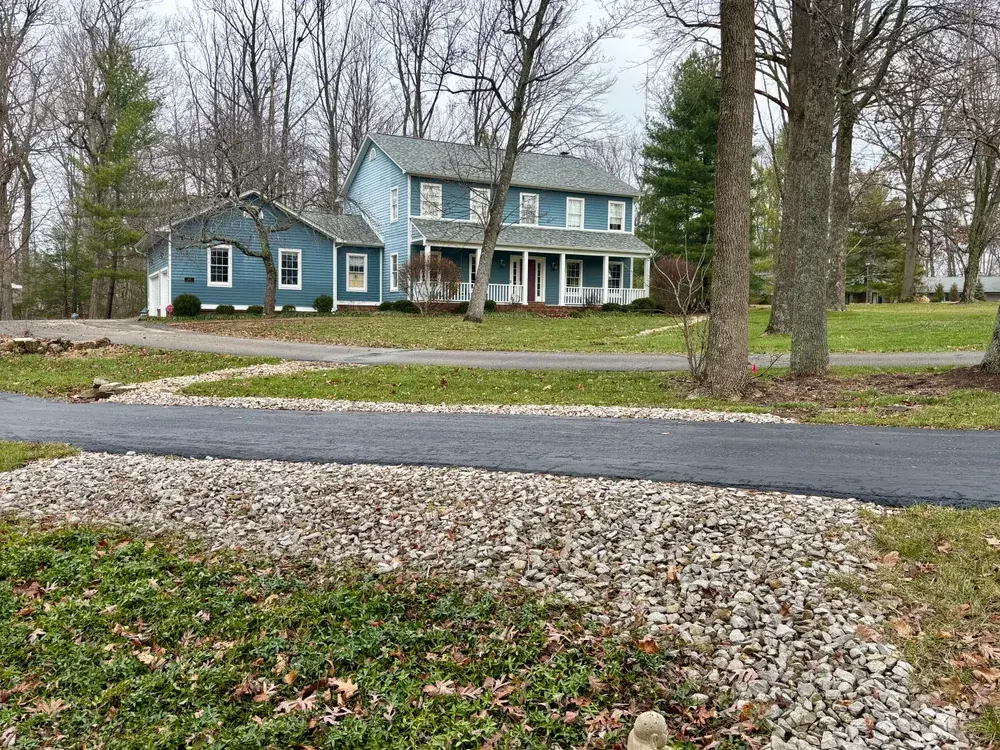
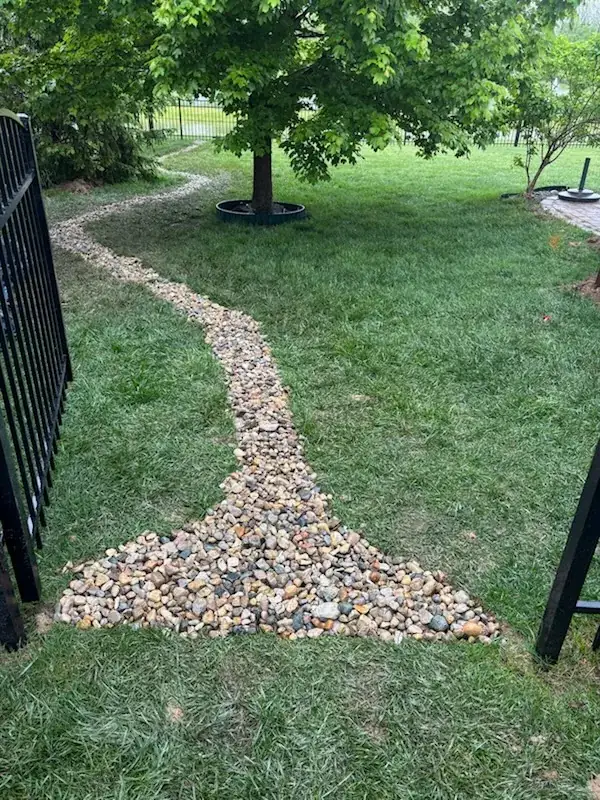
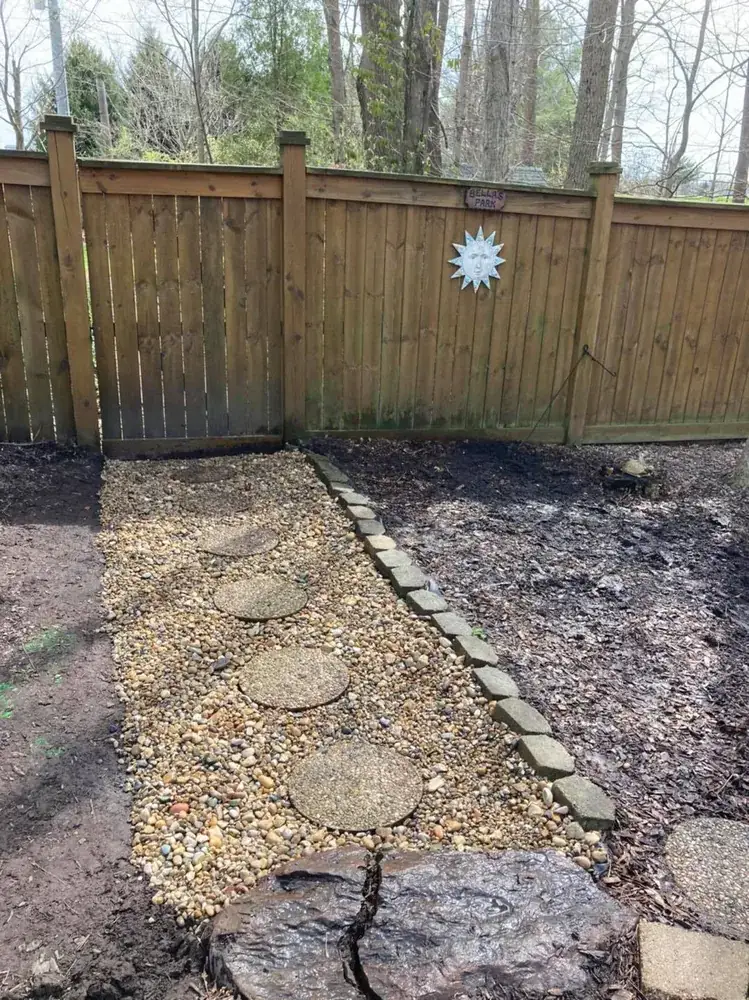
The difference is where the water is. A French drain, the way we build it, goes inside the basement: we saw-cut the floor next to the wall and lay drain track in the corner where wall and floor meet, and it always runs to the sump pump. A trench drain goes outside: a hand-dug trench that carries water through the yard, finished with river rock level with the grass or tucked under a stepping-stone path.
People use these two names loosely, and other companies may mean something different by French drain. When we say it, we mean the basement drain. When the water is out in the yard, we are talking about a trench drain.
Getting the name right matters because the two jobs happen in different places. One means opening up part of your basement floor. The other means a trench through the lawn, along a bed, or under a path. If you call asking for one and actually need the other, we would rather sort that out on the phone than on the day of the job.
Side by side
How the two drains compare
| French drain | Trench drain | |
|---|---|---|
| Where it goes | Inside the basement, along the wall | Outside, through the yard |
| What it deals with | Water coming in at the bottom of the basement walls | A yard that holds water and stays soggy |
| How we build it | Saw-cut a strip of floor next to the wall, hand-dig the edge, lay drain track in the corner | Dig a trench by hand from where the water collects to where it can leave the yard |
| Where the water ends up | Always at the sump pump | Away from the house, like the far side of a driveway or an existing concrete drain |
| Where you find it | Where the basement wall meets the floor | Across the yard, along a bed, or hidden under a stepping-stone path |
| Dug by hand | Yes | Yes, no machines in the yard |
Which one you need
Start with where you see the water
Water in the basement
If you find water where the basement walls meet the floor after it rains, that is where a French drain does its work. It catches the water at the edge of the floor and carries it to the sump pump.
Before we cut into a floor, though, Anthony looks at the outside of the house. He often suggests a foundation swale first, so the water gets led away before it can get to the foundation and overwhelm it. Here is why a swale often comes before a French drain.
Water in the yard
If the ground stays soggy for days, water sits in the same low spot every time it rains, or it collects along a patio or driveway edge, that is a trench drain job. The trench gives the water a way out, and the river rock on top either becomes part of the yard or disappears under a path.
Water in both places
Some houses have both problems. We look at the yard, the outside of the house and the basement on the same visit, and tell you which fix goes where.
What the two have in common
Both get dug by hand. Both also depend on fall. Every drain we build begins at its highest end and drops 1/8 inch per foot of length, which keeps water moving along it instead of sitting.
Recent work
Both drains, from real jobs
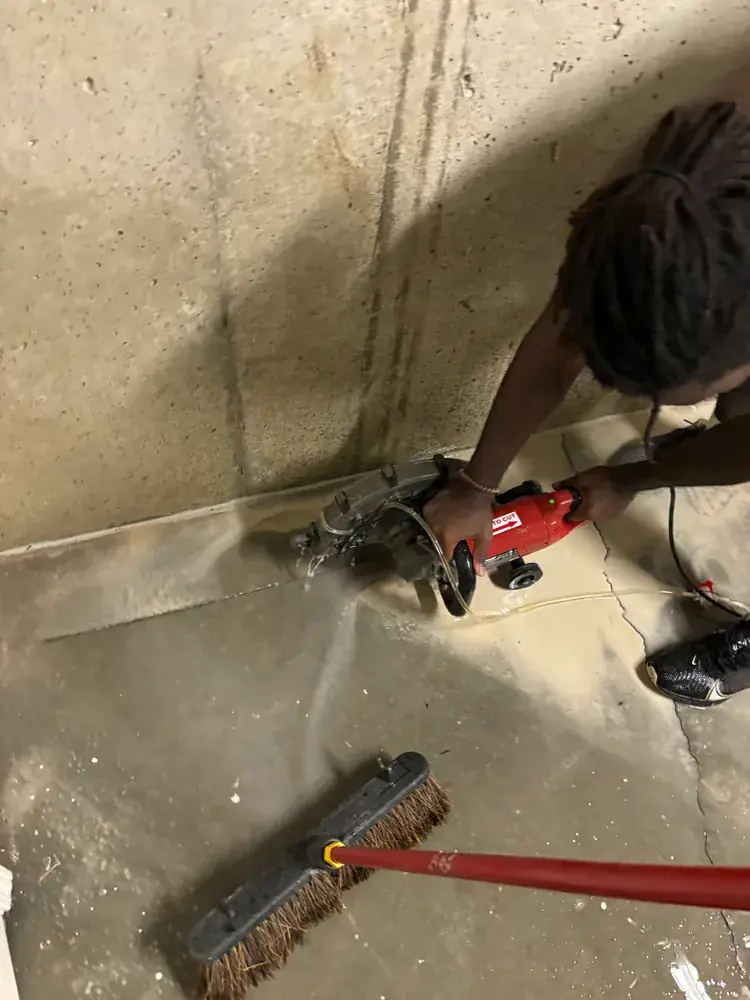
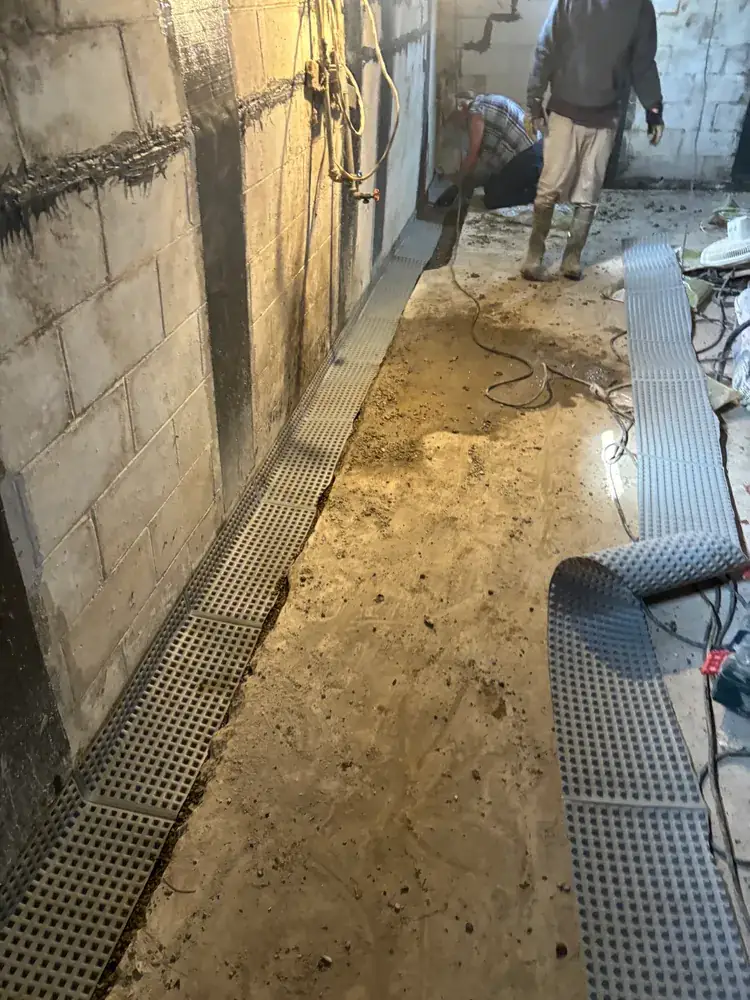
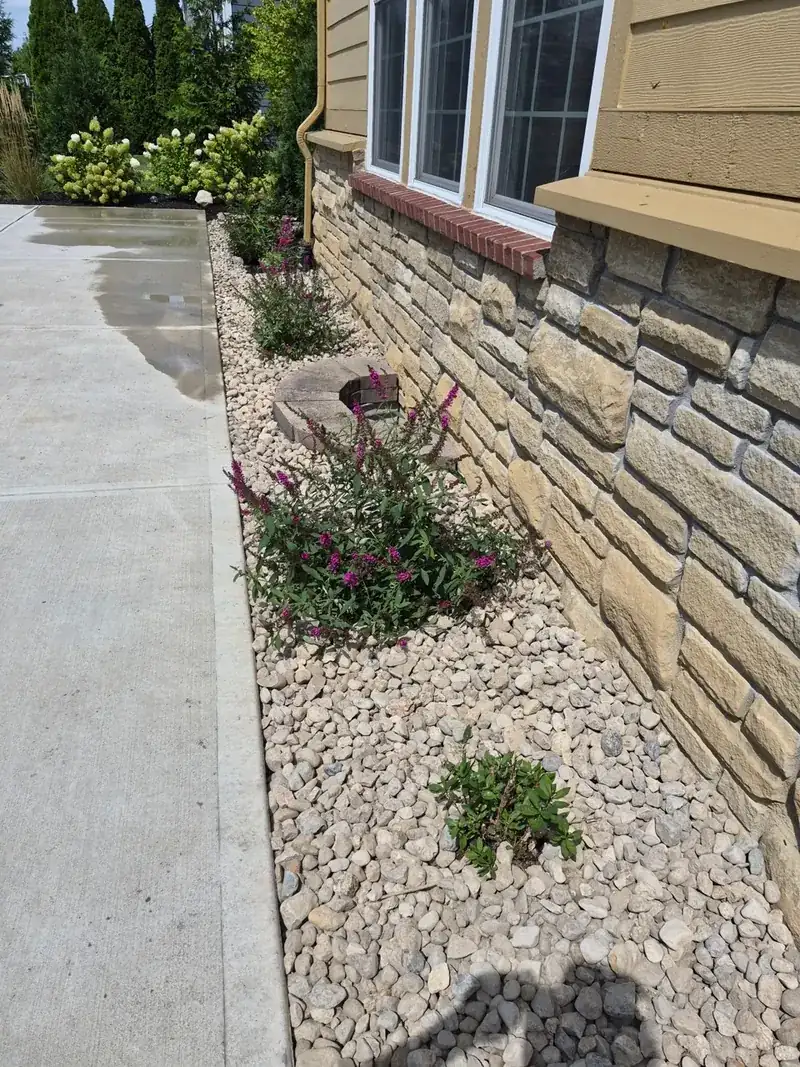
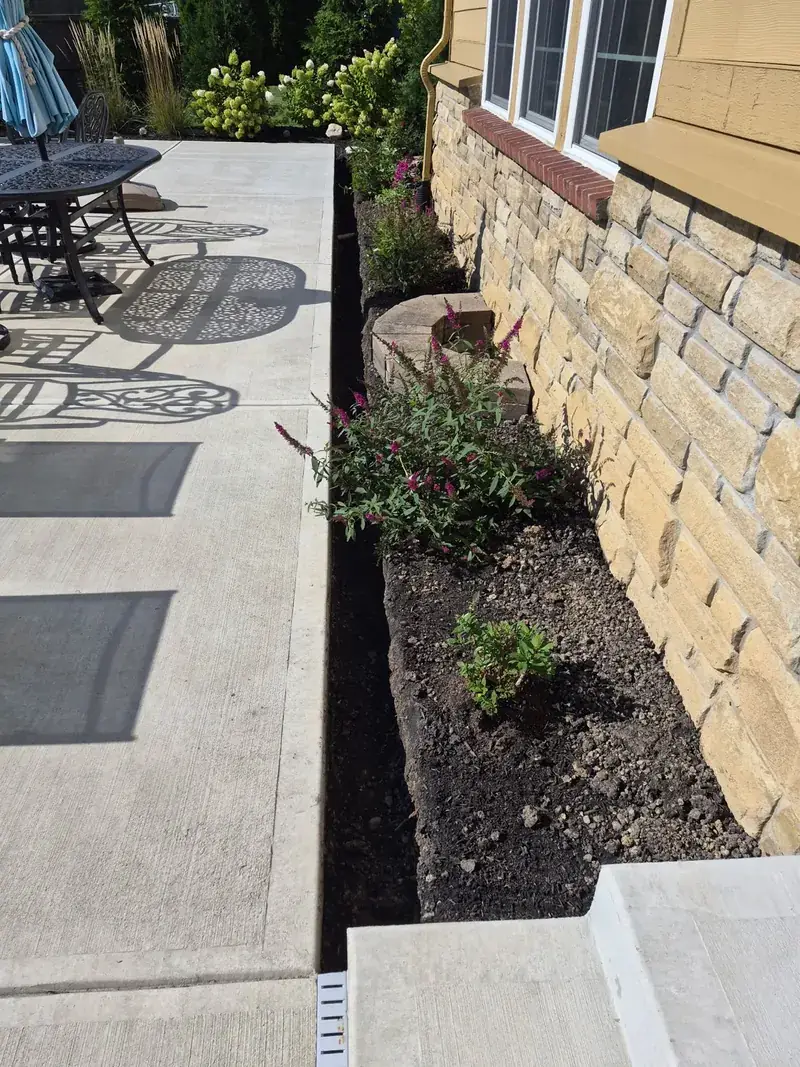 BeforeAfter
What homeowners say
French drain or trench drain
Answers before you call
No, not in our book. Our French drain is inside the basement along the wall and runs to the sump pump. Our trench drain is outside and carries water through the yard.
When we say French drain, we mean the basement drain. For water in the yard we use a trench drain, a foundation swale along the house, or pipe from the downspouts, depending on where the water comes from.
To the sump pump, every time. The drain catches water along the wall and carries it there so it can be pumped out.
Yes. We can lift a stepping-stone path, dig underneath it, and set the stones back over the finished drain. Or the river rock stays in view as part of the yard.
Tell us both when you call. We look at the inside and the outside on the same free visit and give you one fixed written price for the work we agree on.
Where to next?
Free estimate
Not sure which drain you need? We will come look.
Send the form and we will reply within about 30 minutes during business hours. The visit and the written quote are free.
- Dug by hand, no machine ruts in the yard
- Inside and outside checked on one visit
- Fixed written price for a defined scope
- Serving all of Indiana from Kokomo and Bloomington