
Why does my yard stay wet for days after rain?
A yard that is still squishy days after the rain stopped is telling you something. The water got there and it has no way to leave.
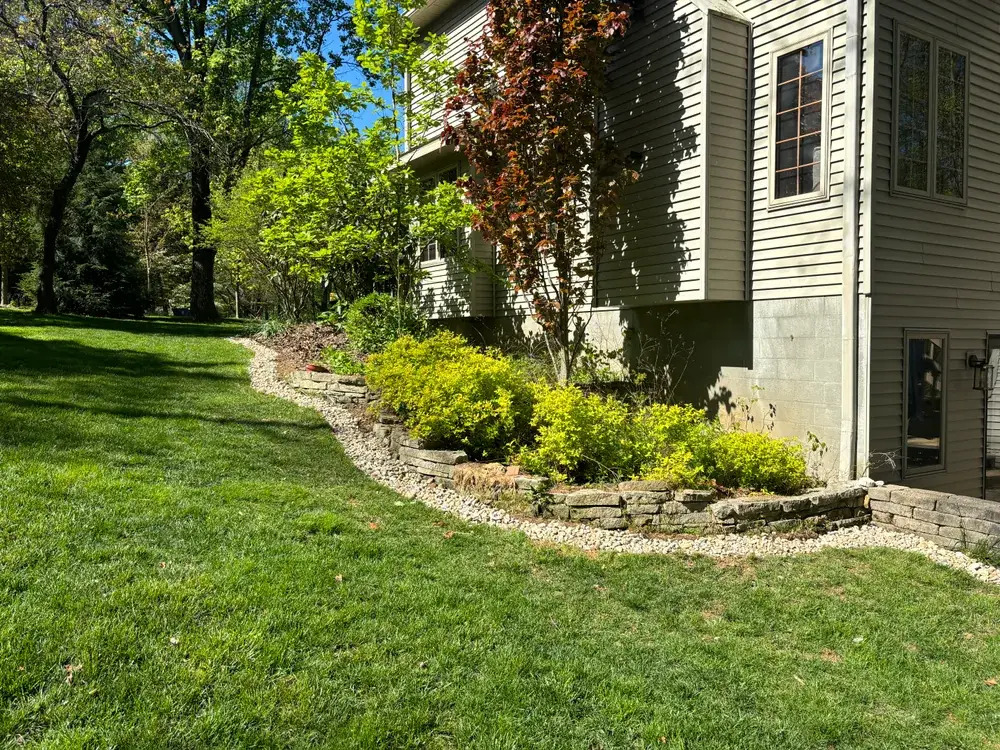
Your yard stays wet for days after rain because the water has nowhere to go. It usually comes from somewhere, like a downspout or higher ground, and settles in a low spot with no way out. The fix is to give it a path: a trench drain dug by hand, pipe from the downspout, or a rock and fabric trench that carries the water out of the yard.
Rain that falls on a yard with somewhere to go moves on. Rain that runs into a dip, or gets dumped in one spot by a downspout, just sits there and soaks in slowly. That is the soggy patch you keep stepping around.
The good news is that most waterlogged backyards are not a mystery. Once you know where the water is coming from and where it is collecting, the fix is usually clear.
Where it comes from
The usual reasons a yard holds water
- A downspout. All the water off that part of the roof comes out in one spot. If that spot is low or close to the house, it stays wet.
- Higher ground. Water runs down from a slope or a neighboring yard and ends up at the bottom of yours.
- A low spot. A dip in the lawn collects water every time it rains, even with nothing pointed at it.
- A hard edge. Water runs off a patio, walk or driveway and collects along the edge with nowhere to go.
- More than one of these. Plenty of yards have a downspout and a low spot working together.
What to check
Things to look at after the next rain
You can learn a lot by walking the yard the day after a good rain. None of this needs tools.
- Where does the water stand, and is it the same spot every time?
- Where does each downspout let out, and is that near the wet spot?
- Does the water seem to come from one direction, like a slope or the yard next door?
- Is it collecting along a patio, walk, bed or driveway edge?
- Is it sitting close to the house?
Bring what you notice to the free visit. It helps us find the source faster, and we will walk the yard with you either way.
How we fix it
How we fix a waterlogged backyard
-
Stand in the wet spot with you
We trace where the water comes in, where it settles, and where it could get out.
-
Pick the right drain
A trench drain when the ground is soggy and the water needs a way out. Pipe when most of the water pours off a downspout. Fabric and rock when the line should trace a flower bed or the shape of the lawn. Sometimes a mix. Here is how we choose between pipe and a rock trench.
-
Dig it by hand
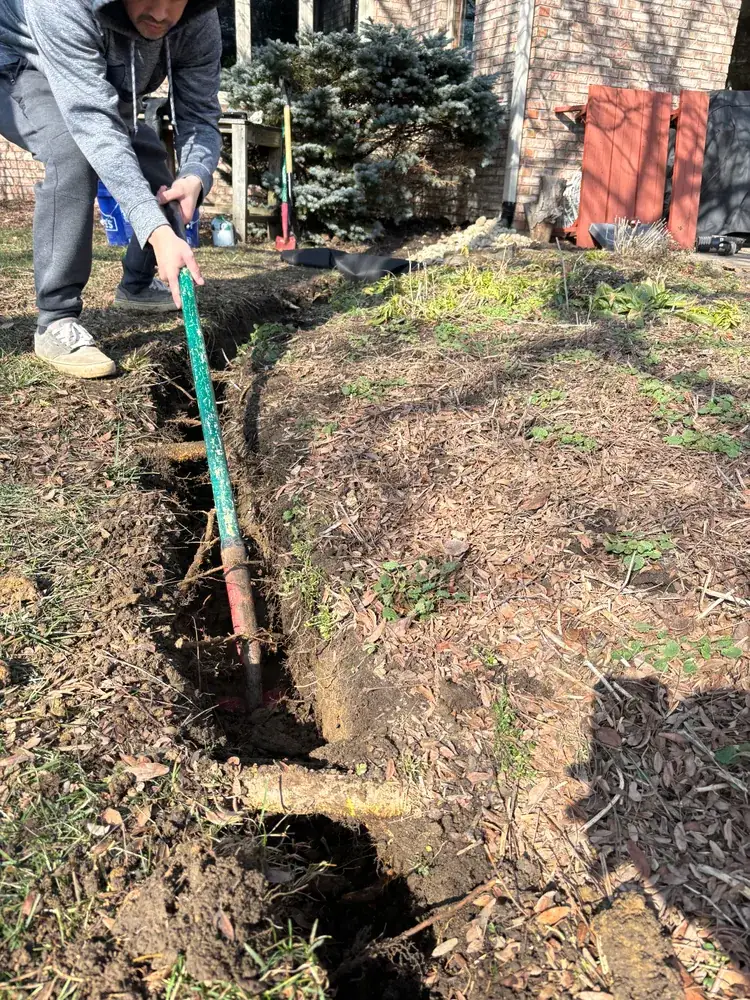
No machines in the yard and no ruts. Our crew digs around tree roots so the plants are not harmed.
-
Build in the drop
Water only moves if the trench drops. Ours fall 1/8 inch per foot, measured from the highest end, all the way out of the yard.
-
Finish it
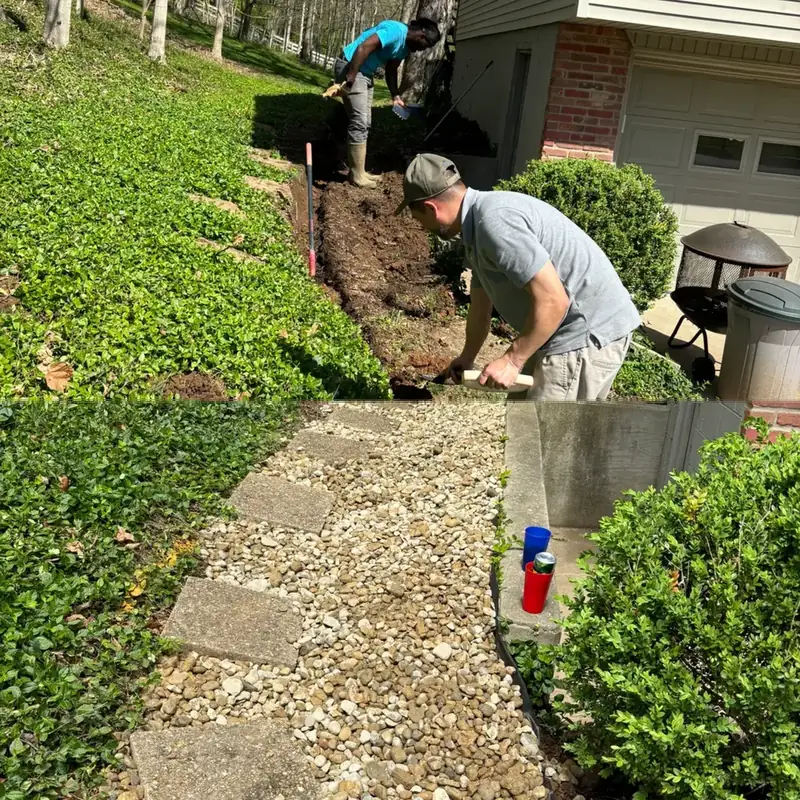
River rock at ground level, or a stepping-stone path back on top. On a pipe run, the strip of sod we lifted goes right back down over the pipe.
Recent work
Soggy yards we have drained
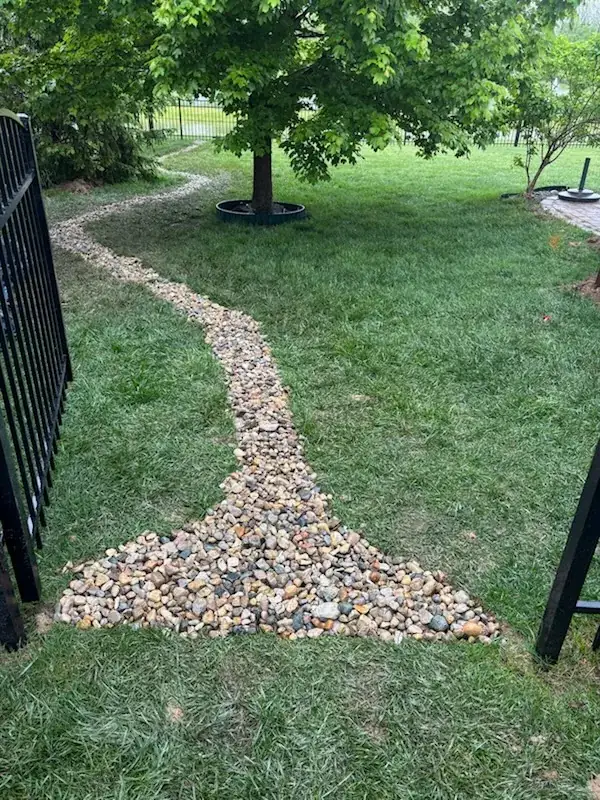
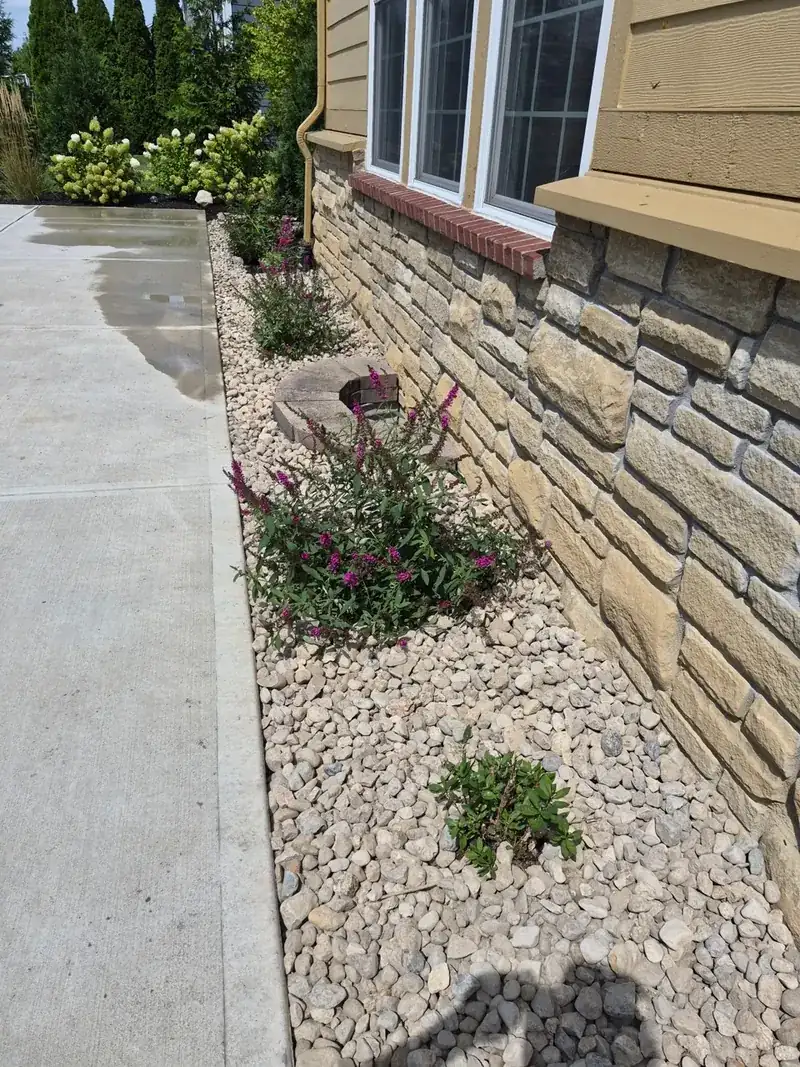
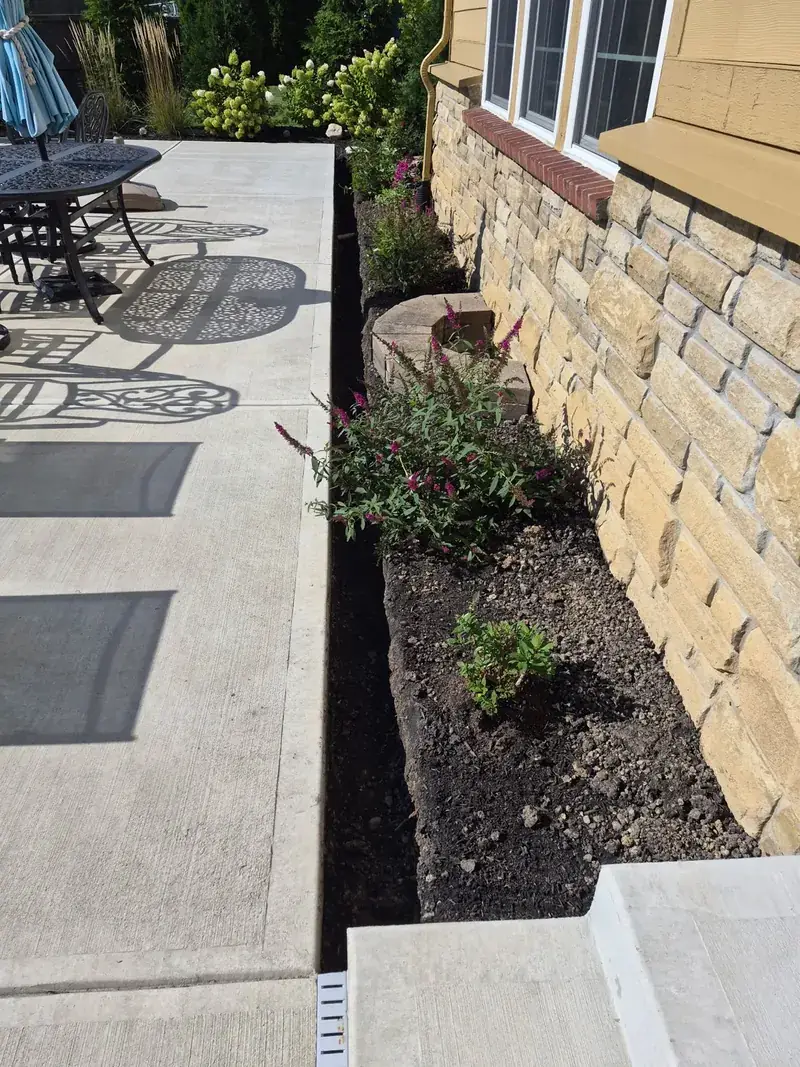 BeforeAfter
What homeowners say
Wet yard questions
Answers before you call
Give the water a way out. That usually means a hand-dug trench drain, pipe from a downspout, or a rock and fabric trench that carries the water out of the yard.
Often, yes. If the wet spot sits near where a downspout lets out, that is the first thing we look at. A pipe from the downspout out through the yard lets the water pass through with ease.
When we say French drain, we mean the drain inside a basement. For a wet yard we use a trench drain, pipe or a rock and fabric trench.
No. It is shovels only, so nothing heavy rolls across the grass. On a pipe run, the cut sod is laid right back over the pipe.
Yes. Digging by hand means we can go around roots and beds instead of through them.
Where to next?
Free estimate
Tired of a yard that never dries out?
Send the form and we will reply within about 30 minutes during business hours. The visit and the written quote are free.
- Dug by hand, no machine ruts in the yard
- We find where the water comes from first
- Fixed written price for a defined scope
- Serving all of Indiana from Kokomo and Bloomington