
What is a dry well? Here is one going in, start to finish.
A dry well is where a trench drain can end: a hole full of rock, wrapped in fabric, with the water headed into it instead of toward your house.
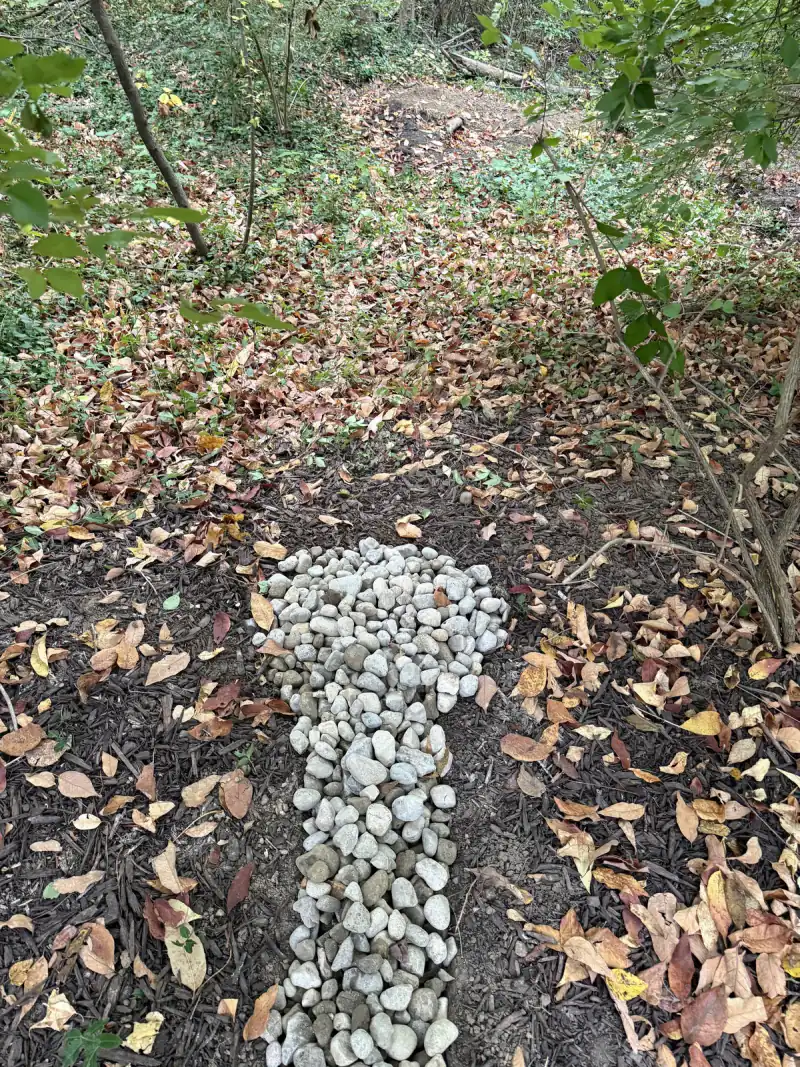
A dry well is a hole we dig by hand, usually 2 to 3 feet deep, fill with rock and wrap in fabric. It sits at the end of a trench drain. The trench carries the water away from the house, and the dry well gives it a place to go.
It is easier to show than to explain, so below is one job from the first day to the last. The water on this property came from two places: the yard slopes toward the house, and a downspout (not in the photos) was adding to it.
The fix was a trench drain along the landscaping, under an existing stepping-stone path, and out to a dry well near the woods.
One job, start to finish
From the trench to the dry well
-
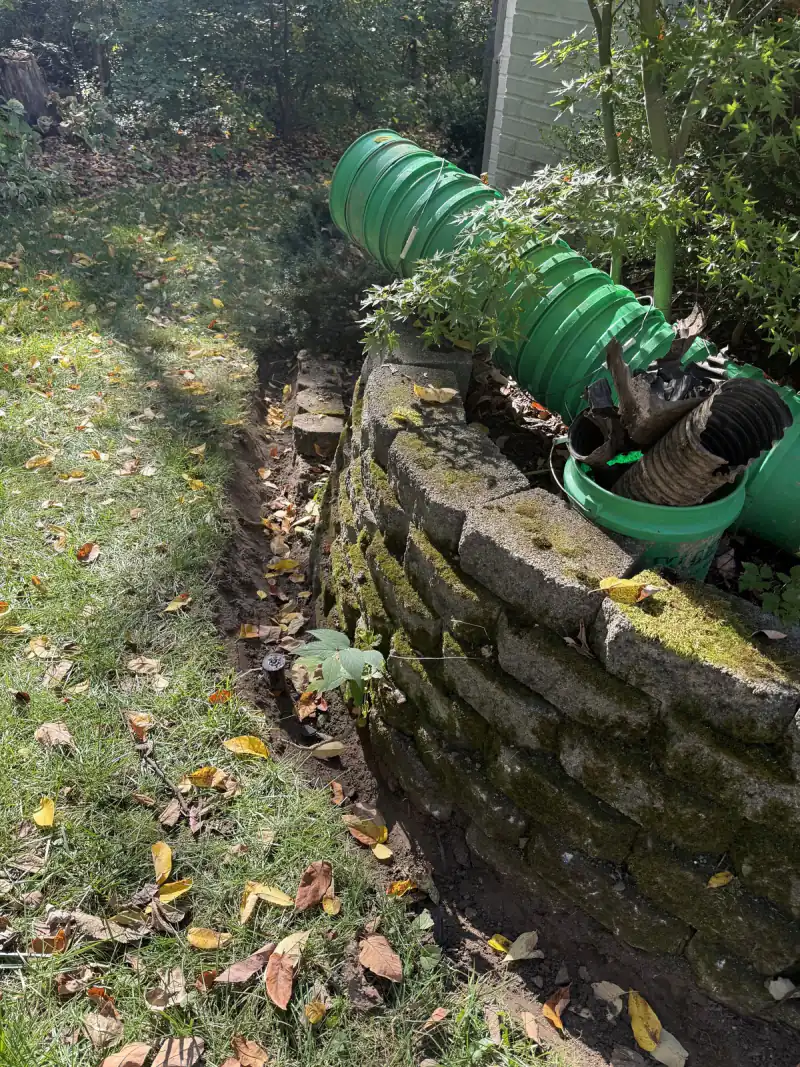
Dig the trench
The trench is dug by hand along the retaining wall. An old corrugated pipe was buried here, and it came out packed with dirt and yard debris.
-
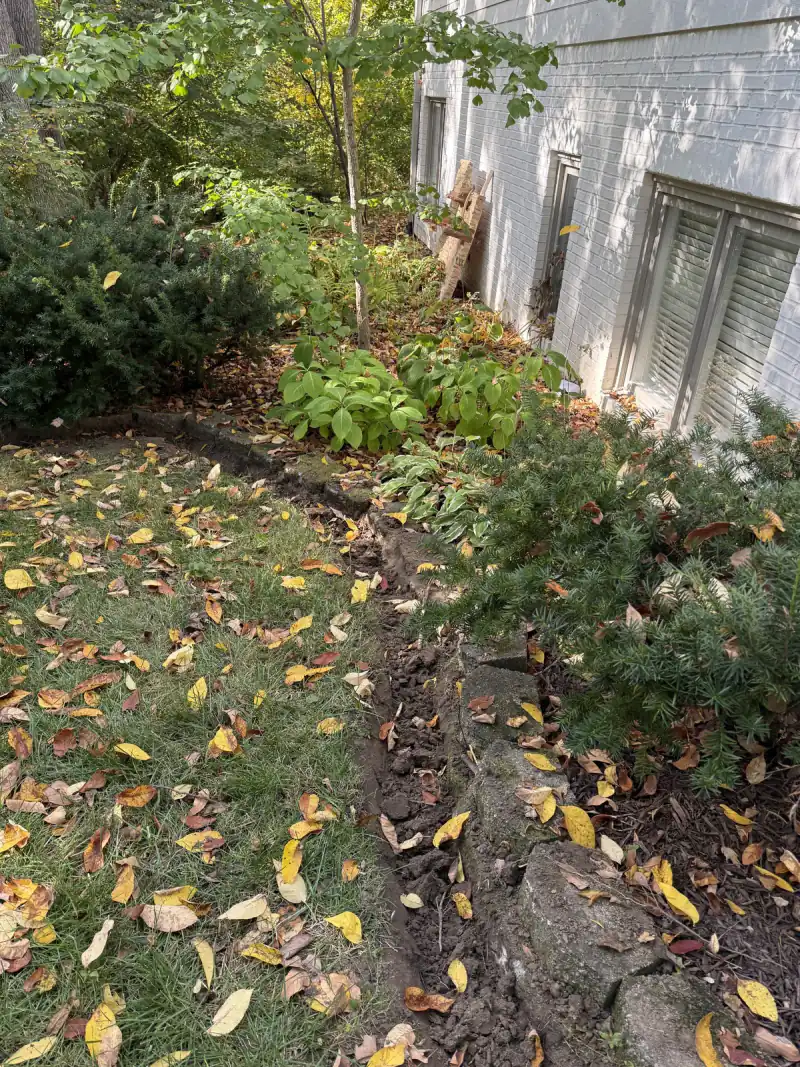
Follow the landscaping
The trench runs between the lawn and the bed, right where water coming down the yard was headed for the house.
-
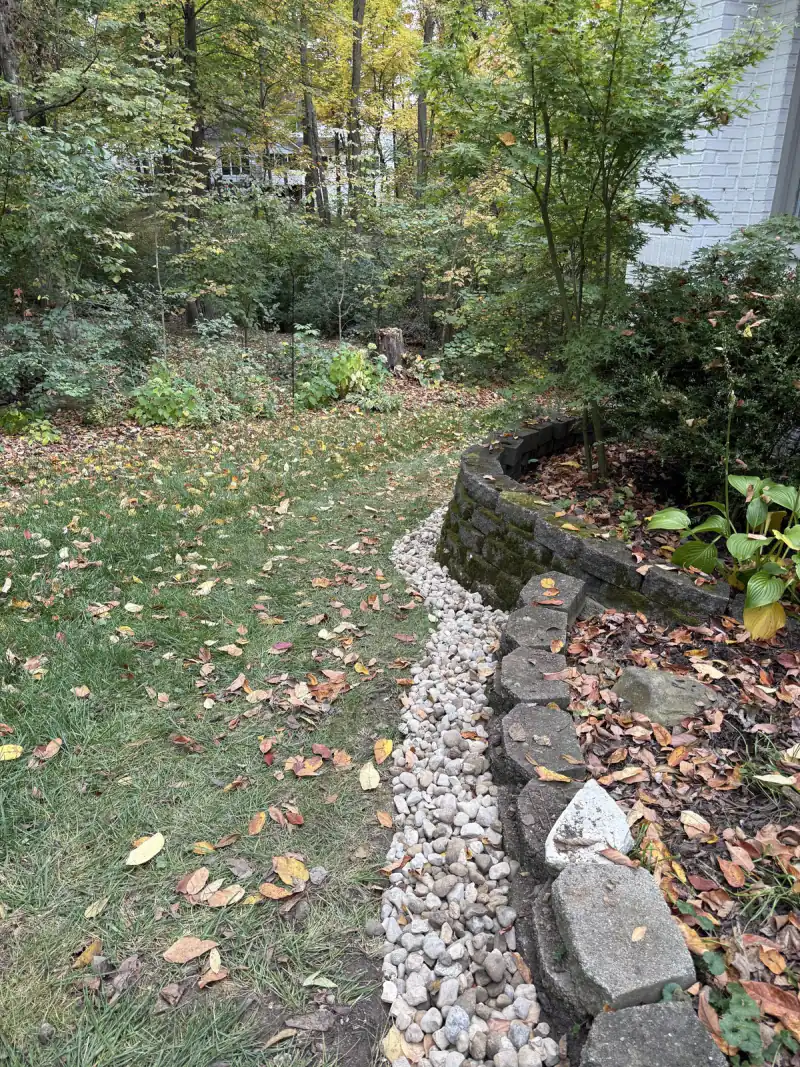
Fabric and river rock
The trench is lined with fabric and filled with river rock. The finished drain hugs the side of the landscaping.
-
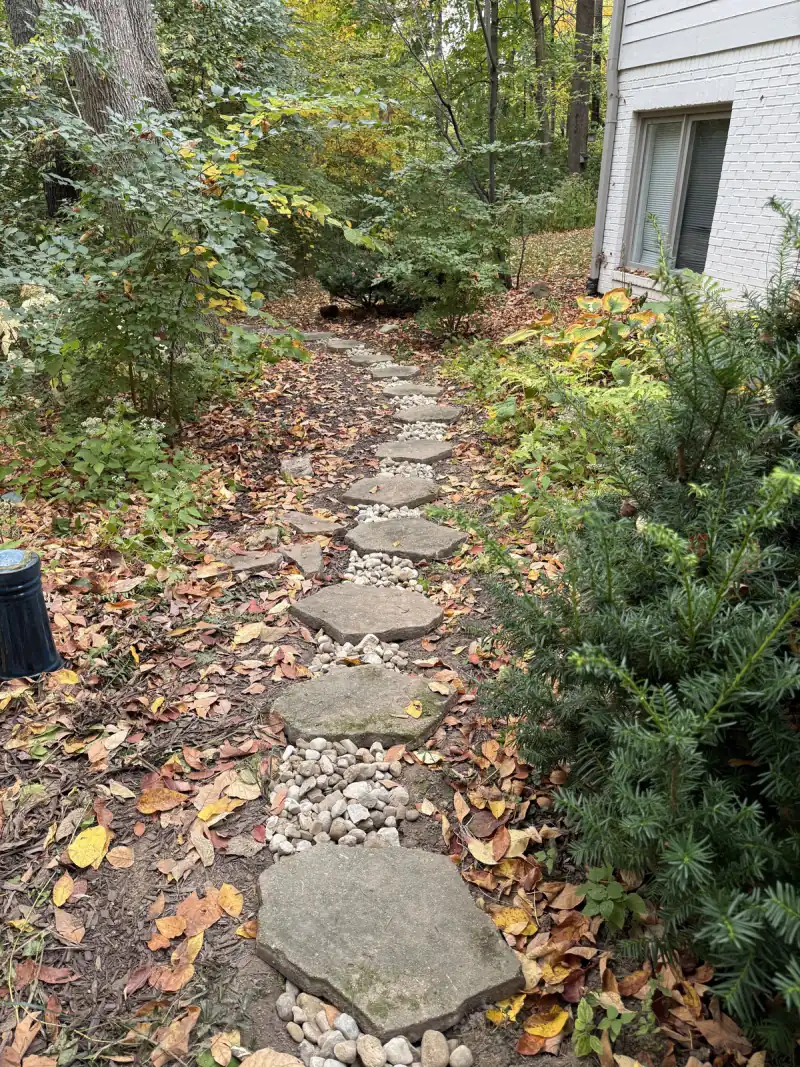
Under the stepping stones
This stepping-stone path was already here. We moved the stones out of the way, ran the trench drain underneath, and put the path back when we were done. The rock between the stones is the drain.
-
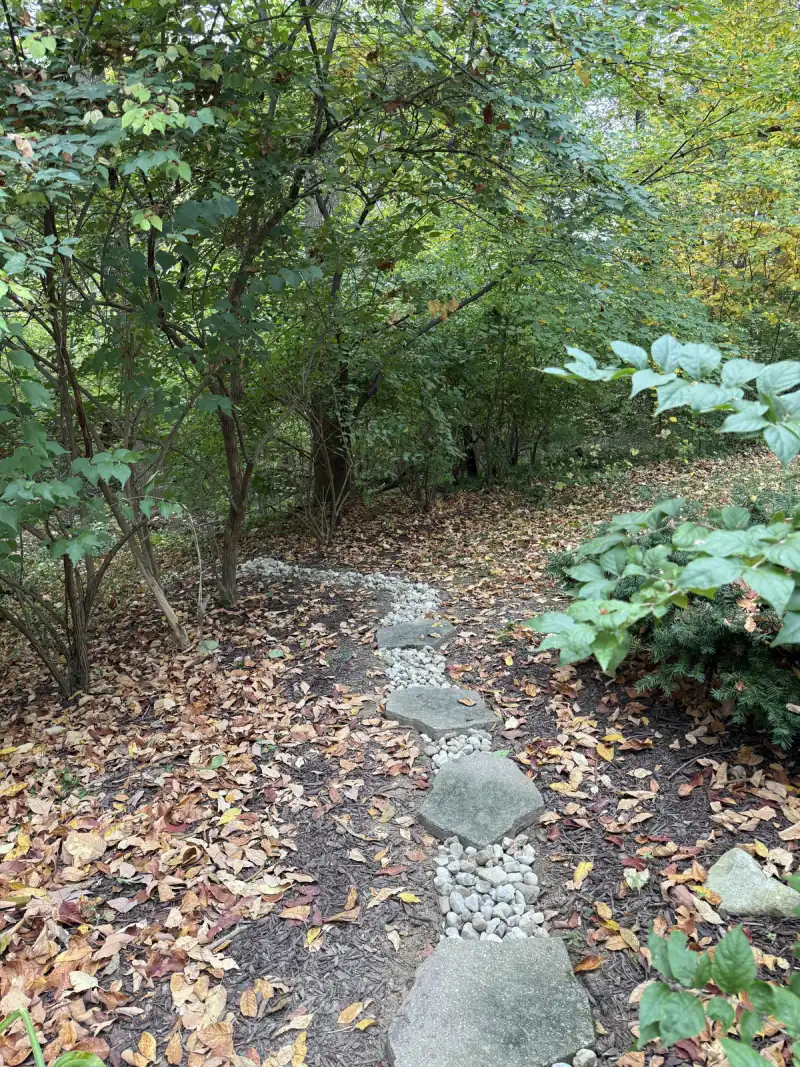
Out toward the woods
The path keeps going, and the drain goes with it.
-
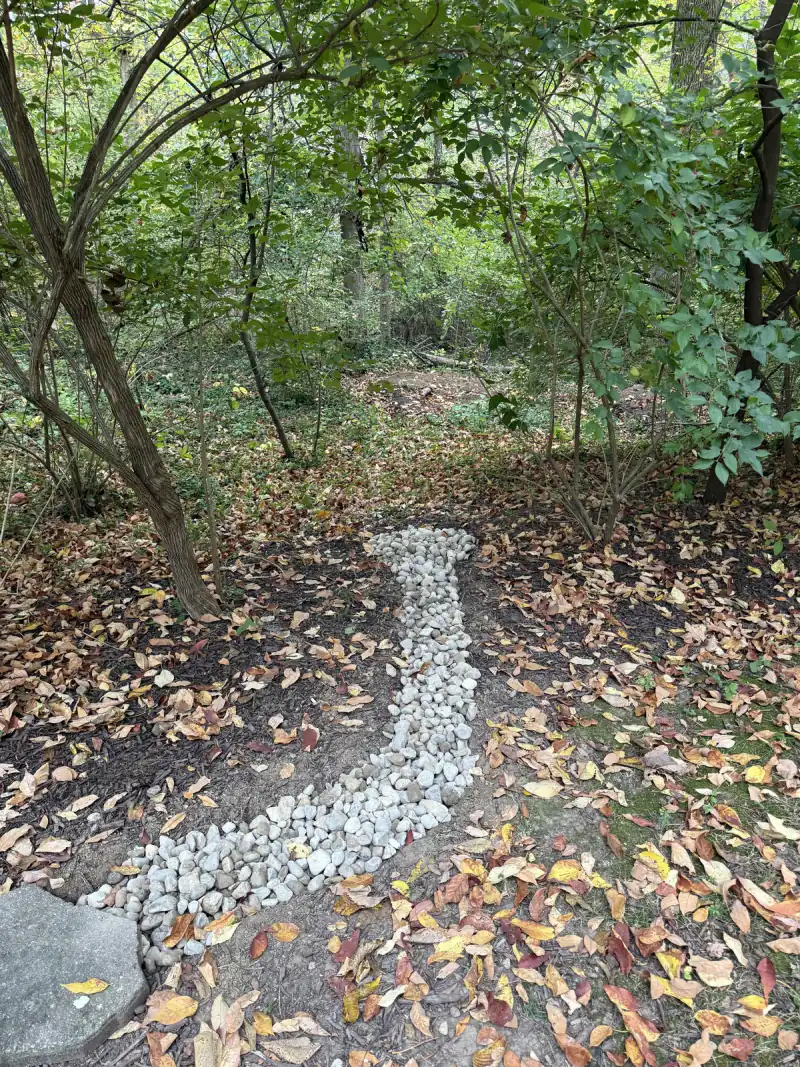
Past the last stone
Where the path ends, the rock line keeps going to the dry well.
-
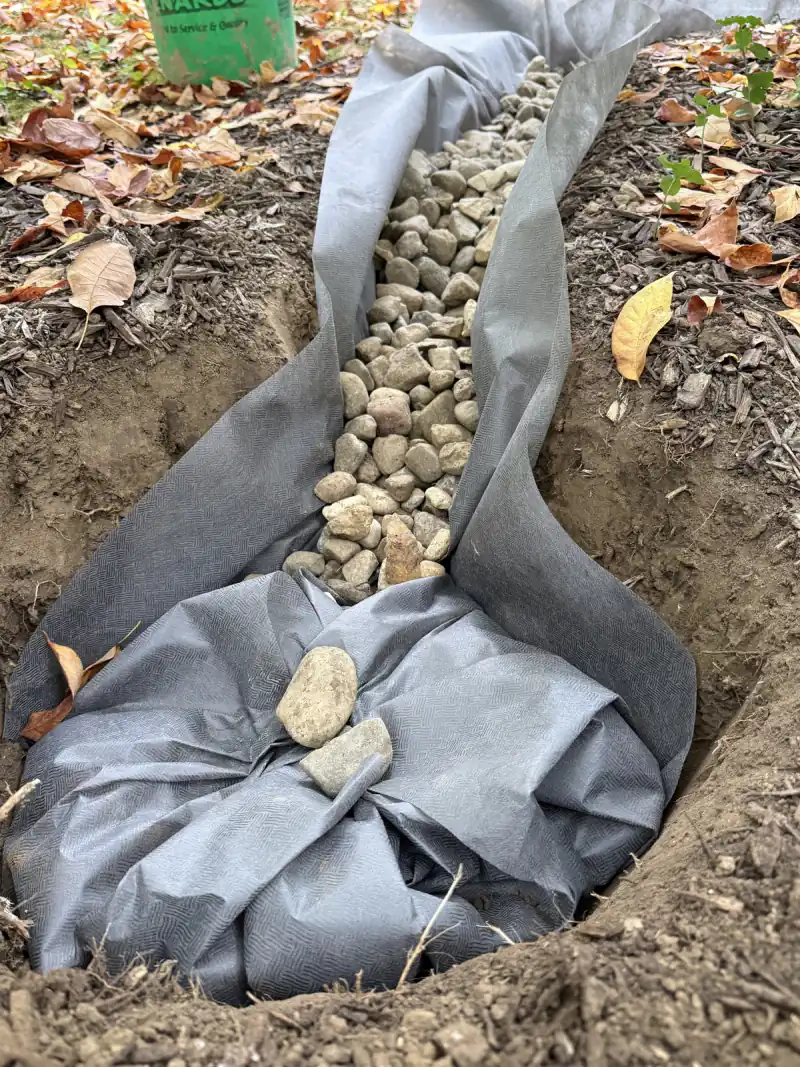
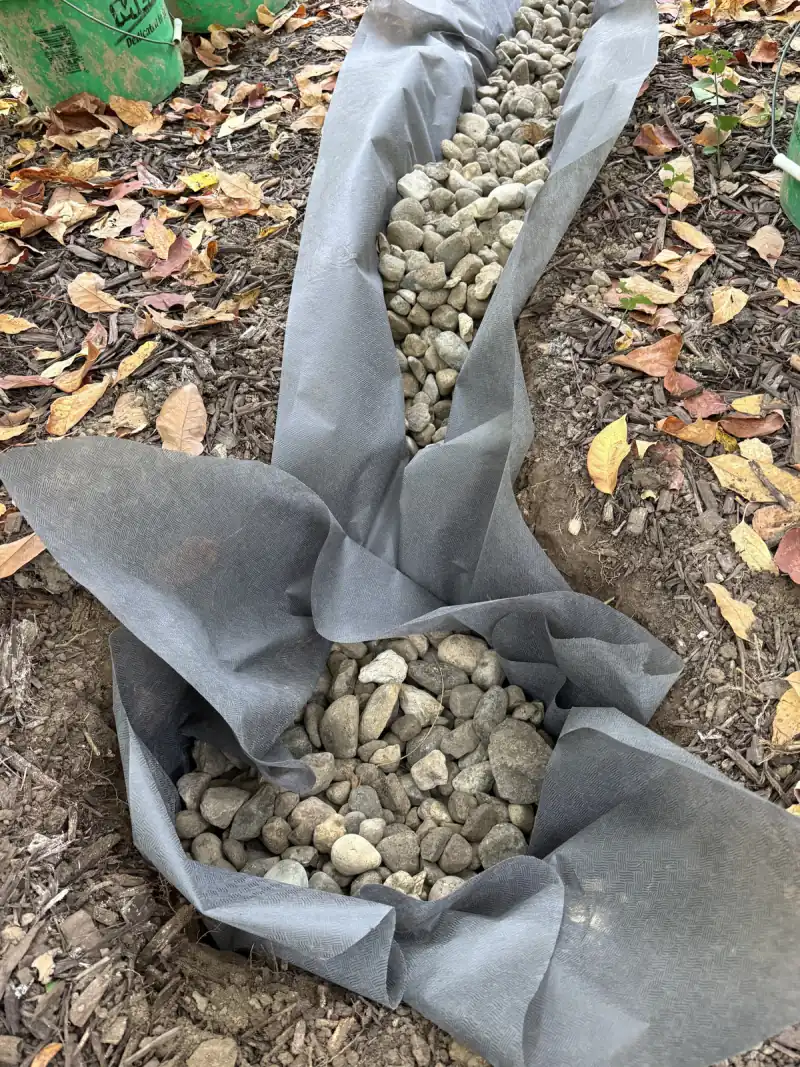 BeforeAfter
Fill the dry well and wrap it
The hole is dug by hand, usually 2 to 3 feet deep, lined with fabric and filled with rock. Then the fabric gets folded over the top, so the rock is wrapped on every side.
Drag the slider to see before and after.
-
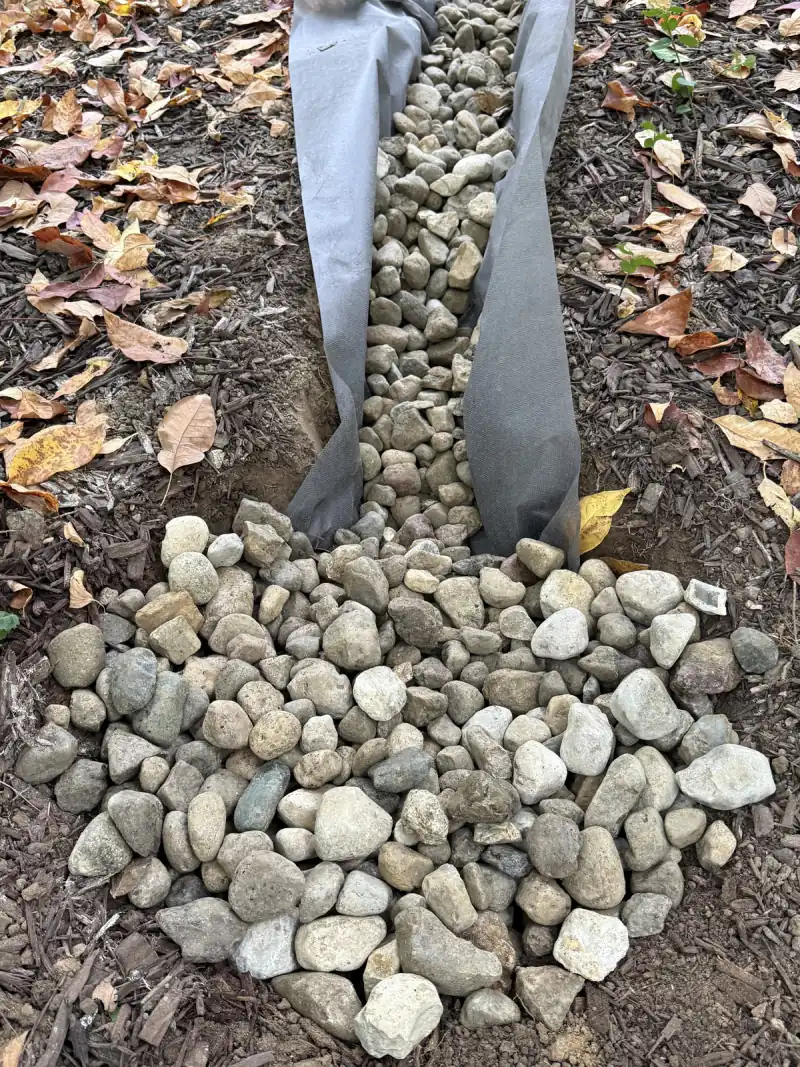 BeforeAfter
Rock on top
More river rock goes over the wrapped dry well, and it meets the end of the trench drain.
Drag the slider to see before and after.
-
Done
Step back and this is all you see: a line of river rock running out toward the trees. The wider patch of rock at the far end is the dry well.
What homeowners say
Dry well questions
Answers before you call
A hole full of rock, wrapped in fabric, at the end of a trench drain. The trench carries the water away from the house and the dry well gives it a place to go.
We usually dig them 2 to 3 feet deep, by hand.
Rock, wrapped in fabric. That is it. The fabric is folded over the top before more rock goes on.
Yes. On the job above, the water came from the yard sloping toward the house and from a downspout, and it all ends up in the same dry well.
Only the river rock on top. Scroll back up to the last photo: it looks like the end of a rock line, not a hole in the yard.
No. When we say French drain we mean the drain inside the basement. A dry well is outside, at the end of a trench drain in the yard.
Where to next?
Free estimate
Water headed for the house? We will show you where it can go.
Send the form and we will reply within about 30 minutes during business hours. The visit and the written quote are free.
- Dug by hand, no machine ruts in the yard
- The right method for each part of the yard
- Fixed written price for a defined scope
- Serving all of Indiana from Kokomo and Bloomington